
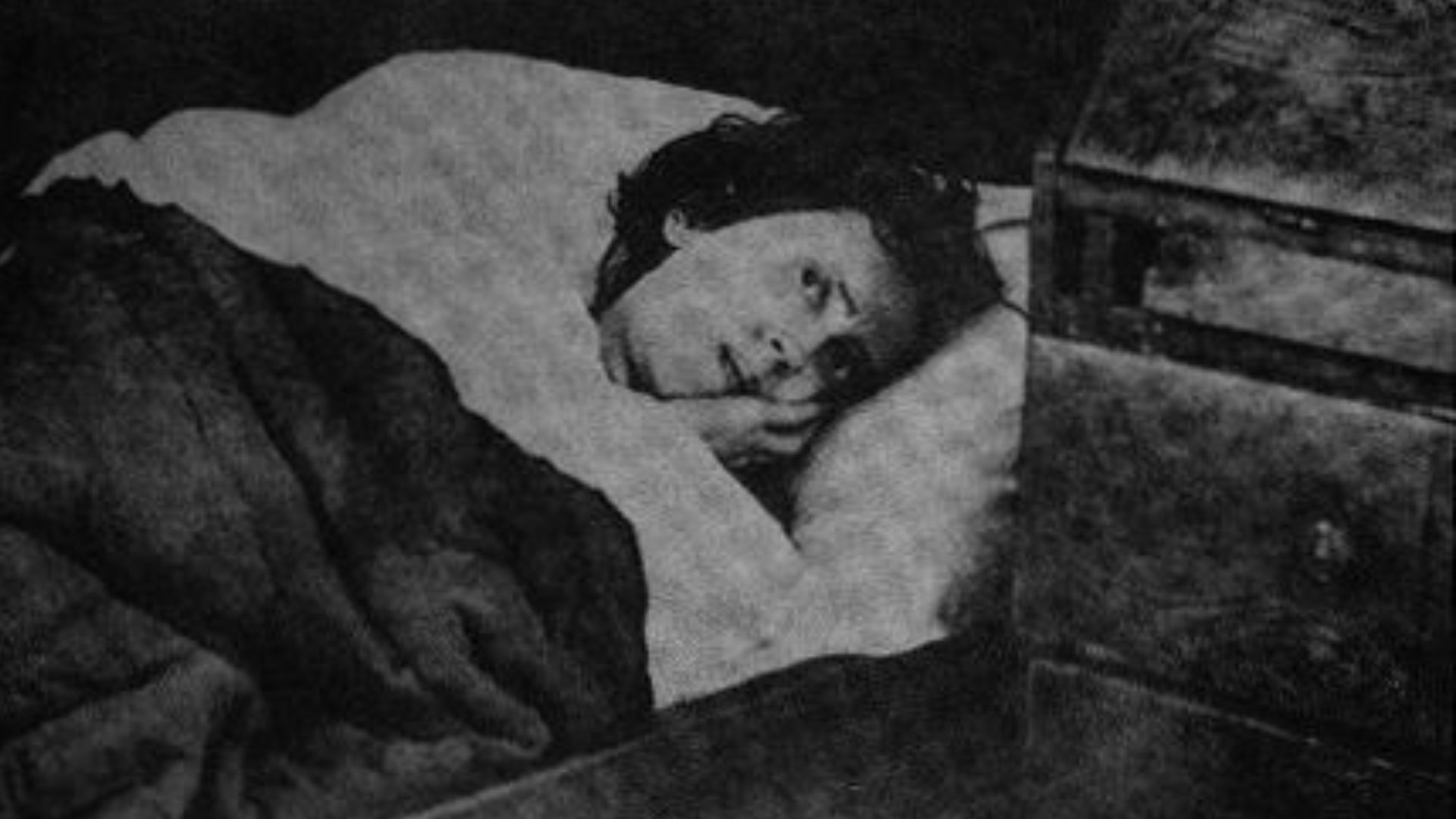
Everyone always jokes that growing up happens in the blink of an eye, but for Karolina Olsson, that was quite literally her reality. On February 22, 1876, Olsson fell asleep in her home in Okono, Sweden, after reportedly experiencing a toothache. The following morning her family attempted to rouse the 14-year-old, but she remained unconscious and would not wake up for another 32 years.
The young girl came home from school feeling “ill and unsettled,” according to Chip Chick. Naturally, because it was the 1800s, her family immediately thought “witchcraft” was the culprit after she continued to complain of tooth pain. Her parents sought the help of both doctors and priests, but nobody could determine the true nature of her affliction. Olsson’s breathing and heart rate stayed steady and she showed zero signs of deterioration, but she would not respond to any outside stimulus.
After 15 years, she was brought to a hospital for observation, but no treatments were effective. The doctor ultimately diagnosed her with dementia paralytica, a severe neuropsychiatric condition brought on typically by late-stage syphilis, despite there being no real evidence it was what she suffered from. Regardless, she was sent home after a month.
For 32 years, her mother and brothers cared for and watched over her body. To sustain her they fed her milk, sugar water, and thin porridge. Her mother died in 1908, and days after being admitted into the hospital after her mother’s death, Olsson woke up at 46 years old.
She awoke to a completely different world — electricity, cars, and phones were all invented while she was “sleeping.” Despite this, she fully assimilated back into society, though she remained unmarried. Olsson died in 1950 at age 88.
To this day, her true affliction remains a mystery. Doctors have theorized several things that could have caused the coma. Some rumors spread that she had witnessed something “terrible” during her childhood that led to having a mental health breakdown and that she had an extreme case of “catatonia,” which can be triggered by trauma. Others suspect it could have been Klein-Levin syndrome, a type of narcolepsy that keeps people in a sleep trance for extended periods of time.
Although I am completely sympathetic that medicine and testing during her time weren’t super prevalent, I can’t help but wonder how she would have fared as a male with that condition. Considering women were often reduced to “hysteria” as a diagnosis, it’s entirely plausible that had this happened to a man, the treatment and result might have been far different.