What to Know
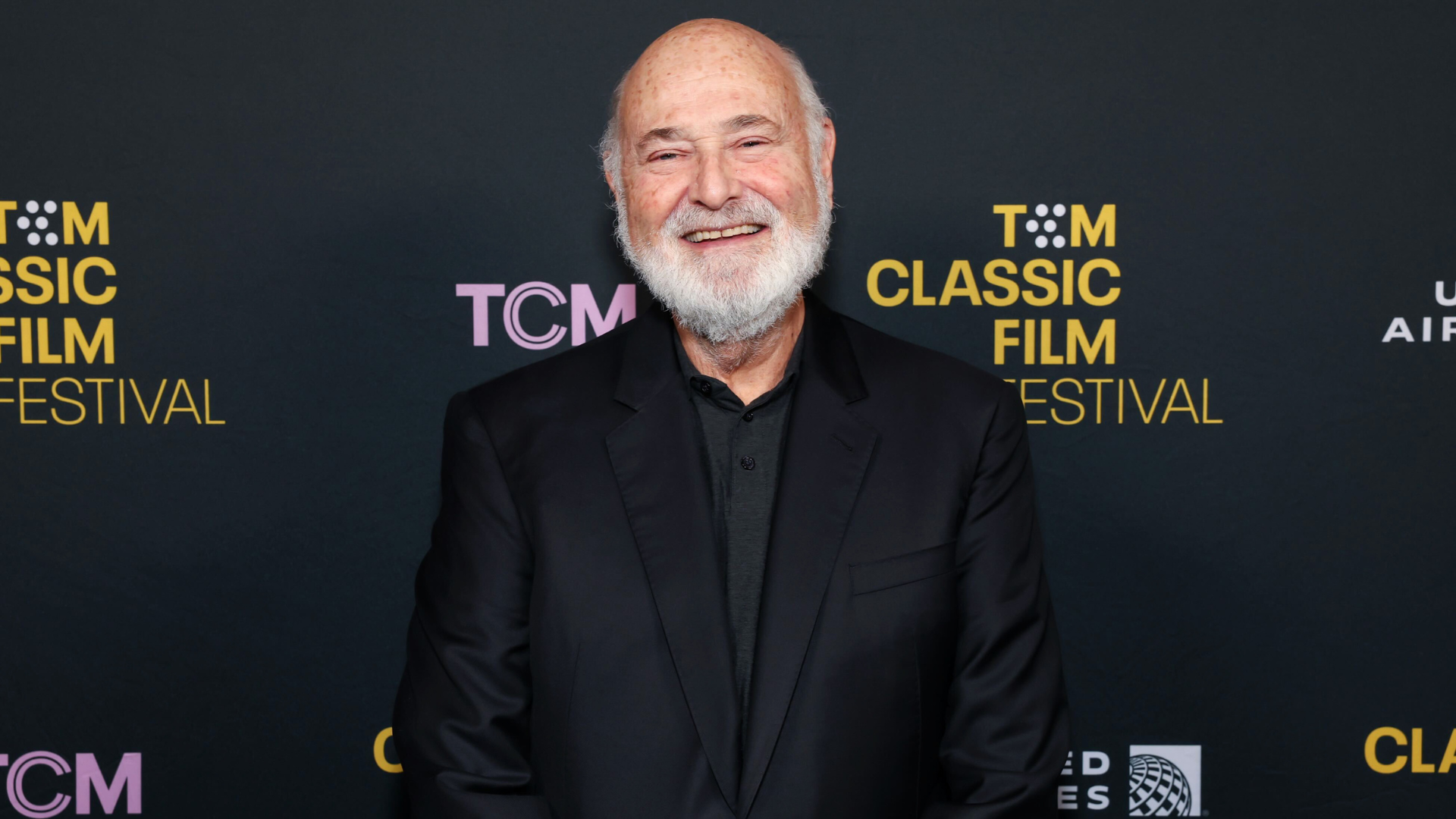
Rob Reiner, who segued from starring in All in the Family to directing movies including This Is Spinal Tap, A Few Good Men and When Harry Met Sally… was found dead Sunday afternoon in his Brentwood home alongside his wife Michele Singer. He was 78. The deaths are being investigated as a homicide, according to TMZ. The couple was reported to have been stabbed to death.
Reiner’s most recent film was Spinal Tap II: The End Continues, the sequel to the 1984 classic This Is Spinal Tap.
The son of the noted writer, director and comedian Carl Reiner, he first attracted attention as Michael “Meathead” Stivic, hippie son-in-law of Carroll O’Connor’s bigoted, blustering blue-collar worker Archie Bunker, during nine seasons of CBS’s topical sitcom.
He collected Emmys as best supporting actor in a comedy in 1974 and 1978.
With credits as a writer on The Smothers Brothers Comedy Hour, Happy Days and All in the Family and a pair of TV movies under his belt, Reiner moved into big screen work as a director, writer and co-star in 1984’s This is Spinal Tap, the cherished, improvisational mockumentary about a thick-headed heavy metal band.
That project was succeeded during the next decade by a run of box office hits and popular favorites, which demonstrated his uncommon assurance working in a variety of genres. These included Stand By Me (1986), a coming-of-age drama with a youthful cast, adapted from a Stephen King short story; the fantasy The Princess Bride (1987); the new-look romantic comedy When Harry Met Sally… (1989); another King adaptation, the thriller Misery (1990); and the Tom Cruise-Jack Nicholson court martial drama A Few Good Men (1992).
Reiner served as producer of most of his films from 1987 on.
That year, he co-founded the production company Castle Rock Entertainment, which released several of his films and such hits as In the Line of Fire, Needful Things and Malice. The company was acquired by Turner Broadcasting in 1993.
Save for the occasional hit like the bittersweet 2007 comedy-drama The Bucket List with Nicholson and Morgan Freeman, Reiner’s latter-day directorial projects – which included Being Charlie, a family drama, rooted in autobiography — though eclectic as ever, seldom met with commercial favor.
“I’m making the movies I want to make,” he told the Guardian in 2008. “Studios are looking for hundreds and hundreds of millions of dollars in profit and you’re not going to get it with a little movie…But I came into this business to express myself and tell stories, not just churn out a product.”
A prominent progressive voice in the Hollywood community, Reiner was active in several California ballot initiatives. He was an ardent supporter of Democratic candidates and a vocal opponent of President Donald Trump. In 2006, after contemplating a run against California governor Arnold Schwarzenegger, he decided to step away from the race.
He was born March 6, 1947, in the New York borough of the Bronx. His father became one of the most prominent comedy writers and stars of the so-called “Golden Age of Television,” acting and writing on Sid Caesar’s top-rated Your Show of Shows; he went on to create The Dick Van Dyke Show and direct a number of successful comedy features.
The apple did not fall far from the tree.
Raised in Hollywood, the younger Reiner attended UCLA Film School and began taking small roles in such TV shows as Batman, That Girl, The Beverly Hillbillies and The Partridge Family. He also appeared in his father’s autobiographical feature Enter Laughing (1967).
In 1971, Reiner was chosen, over such actors as Richard Dreyfuss and Harrison Ford, to play Archie Bunker’s put-upon son-in-law, opposite Sally Struthers as his wife Gloria, All in the Family, creator Norman Lear’s Americanized version of the British sitcom ‘Til Death Do Us Part. The show’s frank exploration of topical material previously considered too hot for TV and the great chemistry of the cast (which also included Jean Stapleton as Bunker’s wife Edith) made it a pivotal series in small-screen history.
It took a few years for Reiner to find his footing after parting company with All in the Family in 1978, but with his first major feature in 1984 he created an iconic musical comedy. Built on a roughly sketched treatment and essentially improvised in front of the camera, This is Spinal Tap introduced Christopher Guest, Michael McKean and Harry Shearer as the dim-witted members of the titular band, with Reiner portraying earnest doc director Marty DiBergi.
Between 1986 and 1992, Reiner proved his versatility in a succession of films featuring strong performances. His work with the adolescent cast of Stand By Me earned him Golden Globe, Independent Spirit and DGA Award nominations. The offbeat The Princess Bride acquired a devoted cult following.
His most assured directorial performance may have been When Harry Met Sally…, which perfectly paired Billy Crystal and Meg Ryan as close friends who end up entering a romantic relationship. Written by Nora Ephron, the hit comedy featured an indelible sequence in which Ryan loudly demonstrates a fake orgasm for Crystal in a crowded restaurant; the scene’s unforgettable punchline, “I’ll have what she’s having,” was delivered by the director’s mother Estelle.
Reiner’s box office track record began to cool in the late ’90s, as the writer-director increasingly pursued less commercial, more political subject matter, from the ’60s civil rights movement (Ghosts of Mississippi, 1996) to the political career of Lyndon Johnson (LBJ, 2016) and the Gulf War of 2003 (Shock and Awe, 2017).
In 2023, he directed the documentary Albert Brooks: Defending My Life.
One of the most outspoken of Hollywood political activists, Reiner eschewed office seeking in favor of work for his preferred causes, which encompassed gay rights advocacy and a protracted battle with the tobacco lobby.
“No, I don’t want to be an elected official,” he said. “I want to get things done.”
Reiner and his wife are survived by children, Jake, Nick and Romy. He was the adoptive father of actress Tracy Reiner, the daughter of his first wife, the late actress and director Penny Marshall.
—
Chris Morris
Variety Entertainment News Service
Variety
© 2025 Variety Media, LLC, a subsidiary of Penske Business Media; Distributed by Tribune Content Agency, LLC