These days, it can certainly feel like the Pledge of Allegiance is turning into a bit of a battleground.
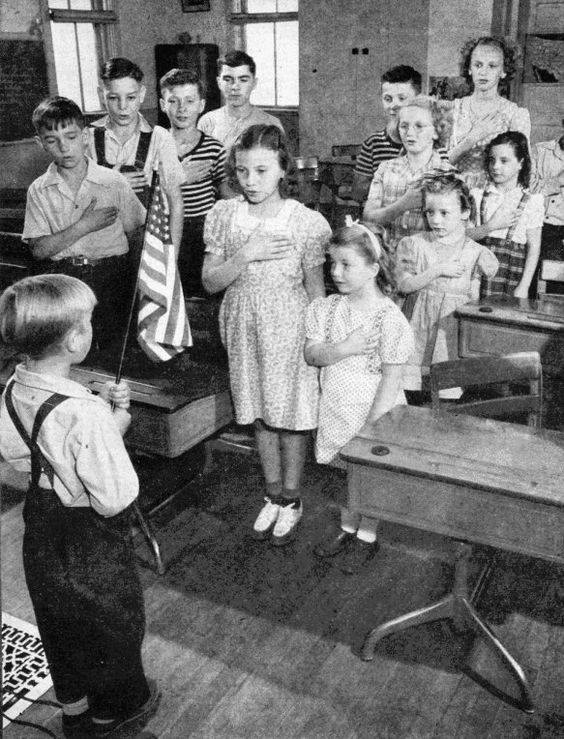
The pledge, which most children learn around the kindergarten mark, is a standard part of most publicly educated students’ morning routine. In general, during morning roll call or homeroom, kids are called to stand, face the flag, and recite those famous words.
And it’s not just part of the morning routine. The pledge is also rolled out everywhere, from cheerleader-guided pep rallies to professional sports games.
But the pledge, despite its ubiquity, has a history of controversy dating back to its origins in the late 1800s.
From debates about the wording, to conflicts over freedom of religion, the pledge has its share of detractors. One commonly cited criticism is that legally enforcing the pledge is a violation of the 1st Amendment, which protects free speech.
To that end, schools in Florida have taken a novel approach to the controversial pledge, one that has some parents applauding and has left others steaming.
Read on below to learn more about Florida’s take on the classic morning pledge routine.
The controversy started with a form sent home with a number of students in the Tallahassee area during the first week of school.
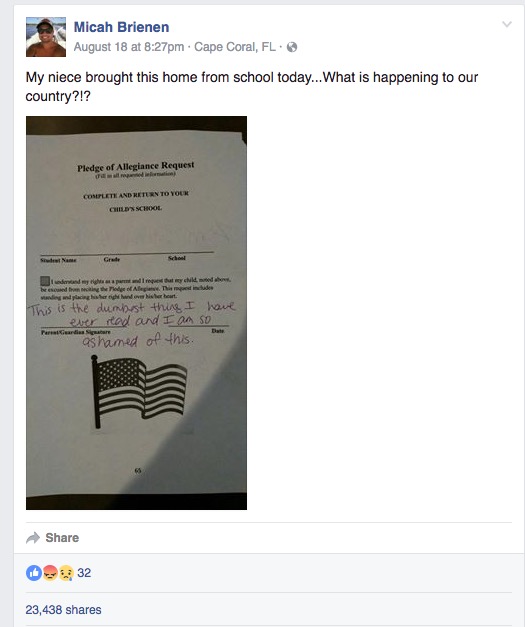
One little girl brought the form home from elementary school, where it was spotted by her uncle, Micah Brienen, who had an immediate and very strong reaction to the contents.
He posted the form to Facebook, adding his own colorful addition to content.
Just days after posting, his variation on the form had been shared nearly 24,000 times.
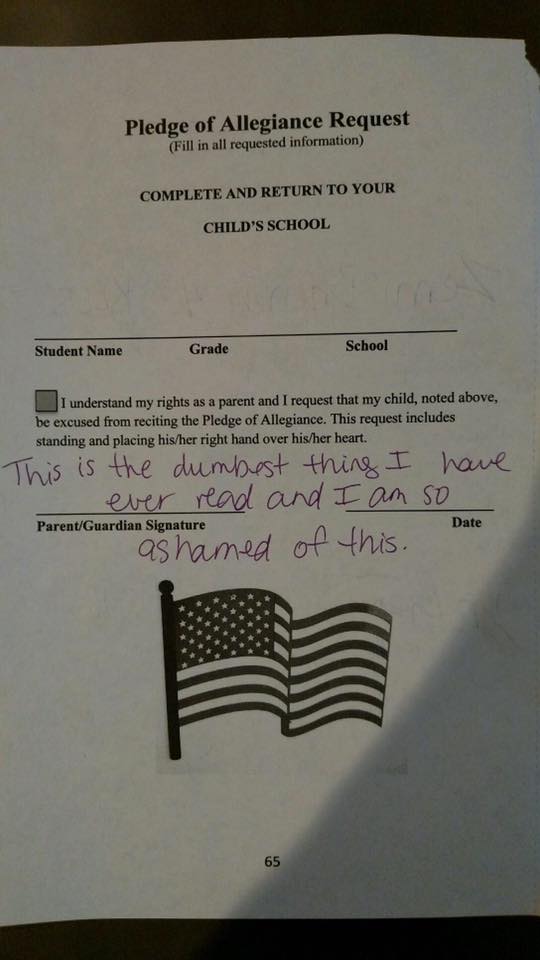
The form is entitled "Pledge of Allegiance Request," and the body of the form reads as follows:
“I understand my rights as a parent and I request that my child, noted above, be excused from reciting the Pledge of Allegiance.
This request includes standing and placing his/her right hand over his/her heart."
Brienen had added a thought of his own on the signature line: "This is the dumbest thing I have ever read and I am so ashamed of this."
Lots of folks immediately agreed with Brienen, while others weren't immediately sold on his take on the issue.
The pledge has been around for more than 100 years, but has faced controversy many times, including the addition of the phrase "under God" in the 1940s.
Some argue that the pledge is a violation of the constitutional right to free speech, and that they're a violation of the right to religious freedom.
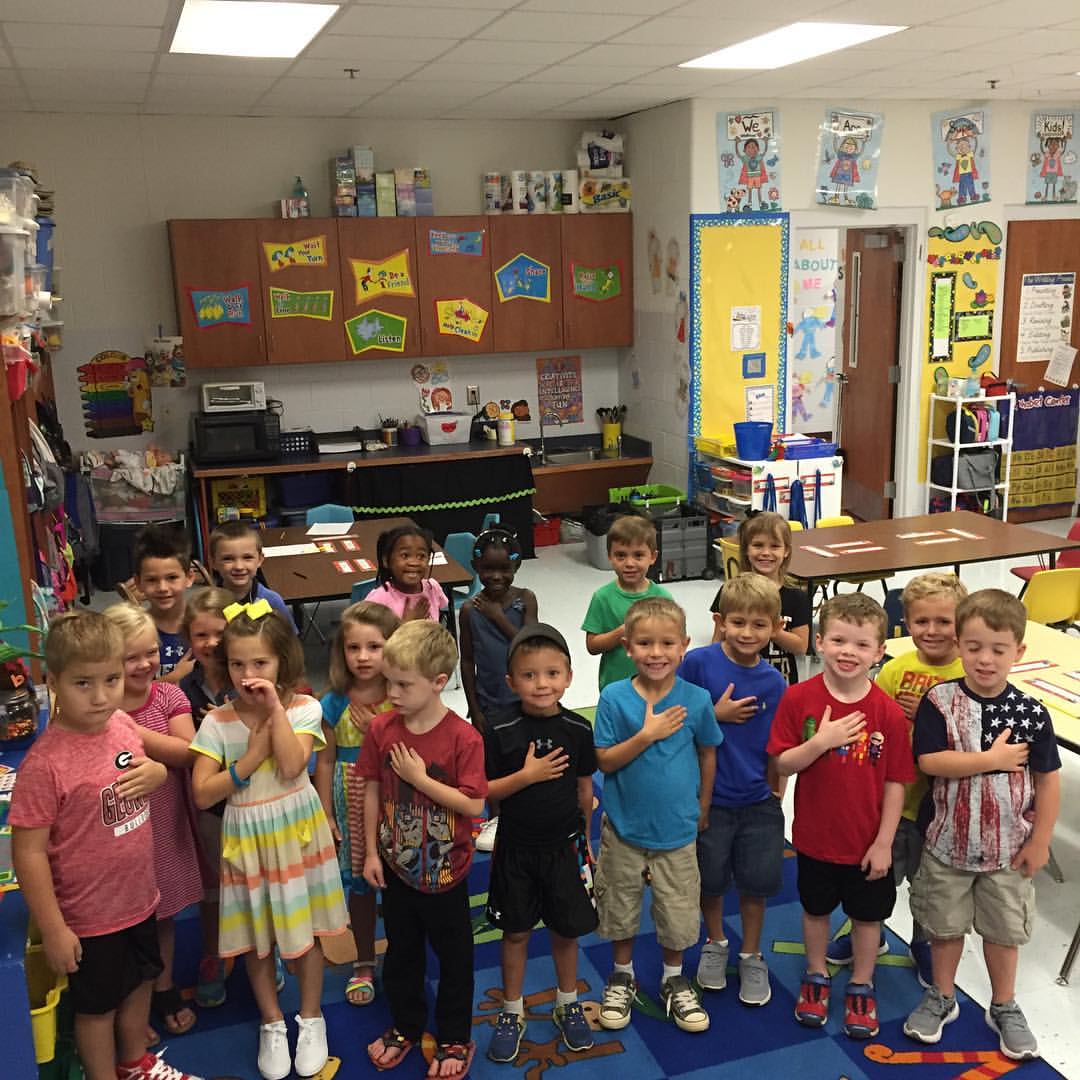
Legislators around the country have responded to the controversy around the pledge in a variety of different ways.
Though virtually every child that goes through the public school system will learn the pledge in kindergarten, some states will allow students with a religious or moral objection to the pledge to simply sit out.
In other states, including Florida, students are required to recite the pledge — unless they have a written note from their parents exempting them.
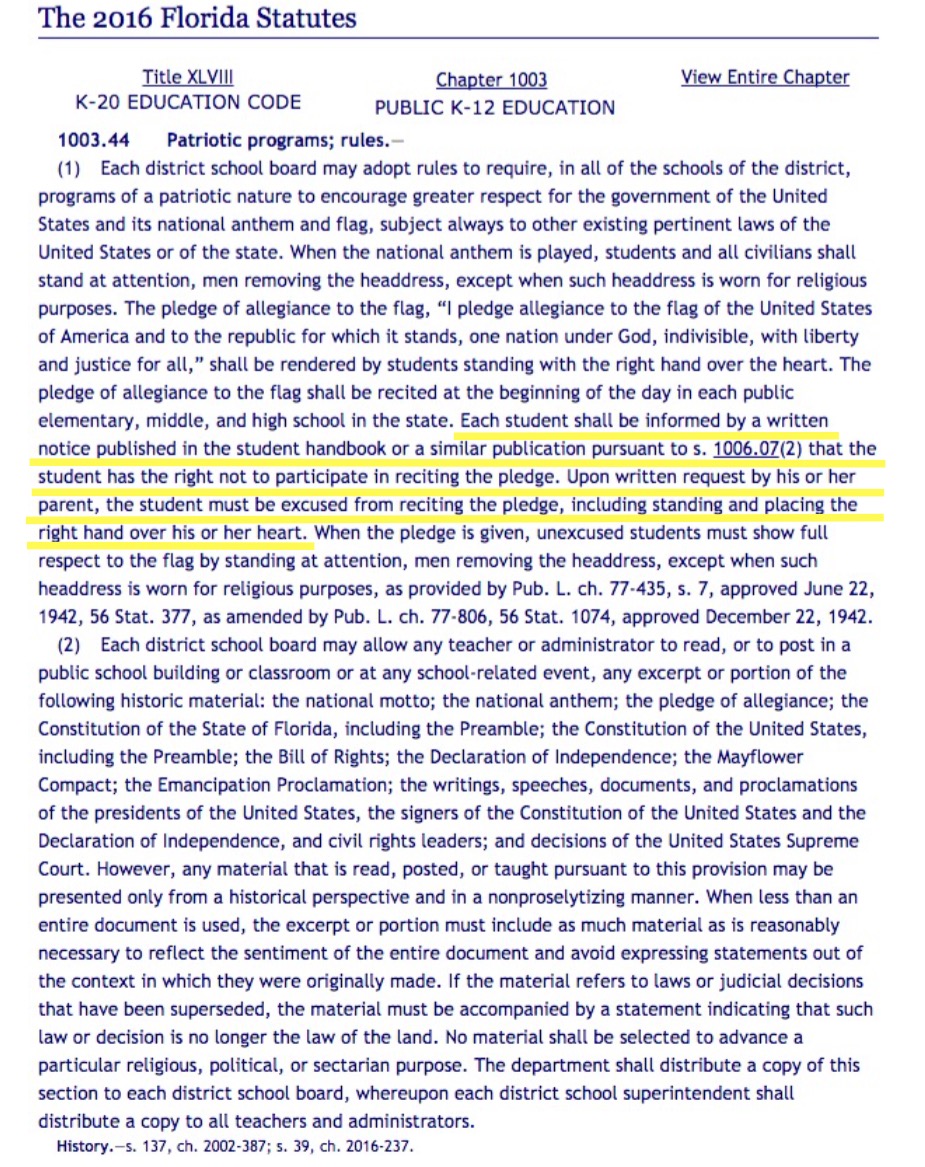
For the past 70 years, Florida law has stated that students can be exempt from reciting the pledge with written consent from their parents, but that teachers could still require all students to get to their feet and place their hand on their heart during the recitation.
As of 2016, the law was changed, so that exempt students now reserve the right to stay seated during the pledge.
The relevant passage in Florida law reads:
“Each student shall be informed by a written notice published in the student handbook or a similar publication pursuant to s. 1006.07 (2) that the student has the right not to participate in reciting the pledge. Upon written request by his or her parent, the student must be excused from reciting the pledge, including standing and placing the right hand over his or her heart.”
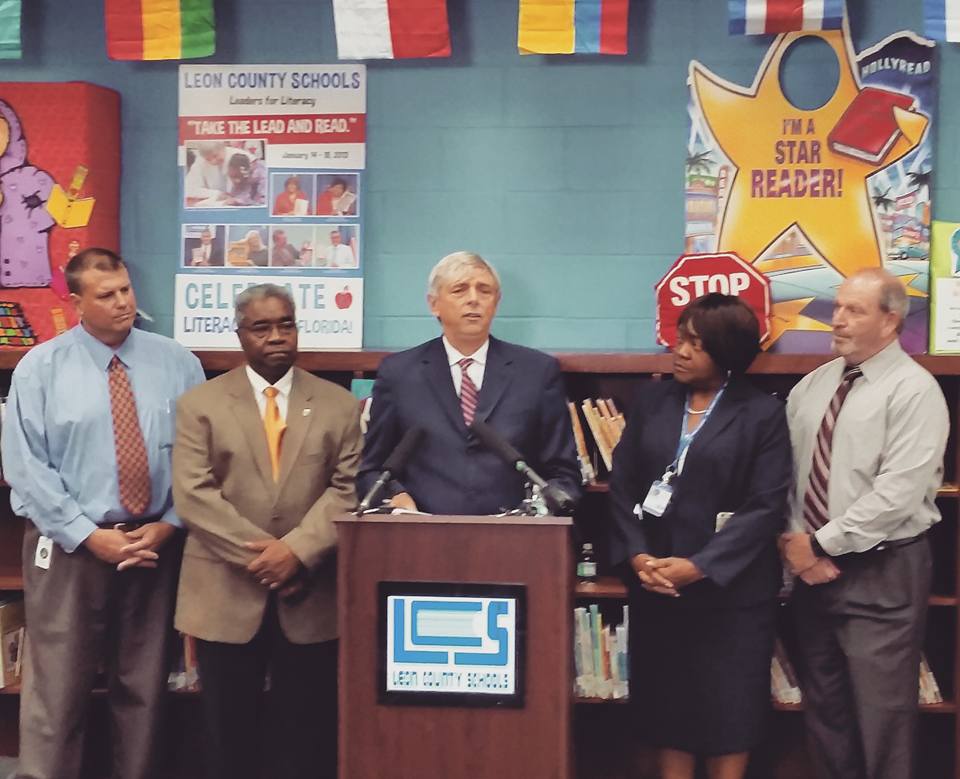
School districts across the state approached the legislative change differently. Most simply updated the handbook to reflect the new rights.
But Leon County Schools, where Brienen's niece is enrolled, chose to include the opt-out form in the handbook as well, under the misleading heading "Pledge of Allegiance Request," which some parents read as a form that had to be signed if they did want their child to recite the pledge.
Now, the school district, led by Superintendent Jackie Pons, is fielding irate complaints from parents, many of who feel that the inclusion of a convenient opt-out form is disrespectful to the flag and to the country.
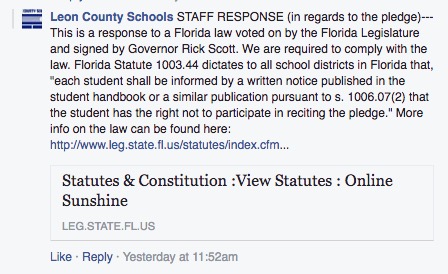
Officials from the school are treading the line regarding this issue.
They have removed the opt-out forms from the handbooks completely.
They continue to defend the initial inclusion as a legal requirement of Florida law, but have also acknowledged that they could have simply included a note about the change in law in the parental rights section, and simply asked parents to sign the handbook to indicate they had been informed of their rights.
The form was an added touch to make it easier for parents to opt out of the pledge, but was actually superfluous to the legal requirement.
Where do you come down on opt-out forms for the Pledge of Allegiance?
Let us know your feelings in the comments below, and don't forget to SHARE with friends and family negotiating the new school year!