
The village of Carnac in France's Brittany region is a popular tourist spot for its beaches, but the seaside town holds much more than summertime getaways. It's also home to a vast and mysterious collection of ancient structures erected by equally mysterious civilizations.
Known as the Carnac Stones, this dense collection of sites feature massive standing stones and structures all built between 4500 and 3300 BCE, during the Neolithic period, which puts it before the construction of Stonehenge.
Ancient relics are fascinating for so many reasons. For one thing, it's amazing to see feats that we'd think would require advanced technology being done by people living 5,000 years ago. For another, it gives us a glimpse as to what people just like us were doing so long ago. It's also amazing to think about something made by a human lasting for so long, whether it be standing stones like these or more modern creations like the 600-year-old sarcophagi nestled on a cliff in Peru. Lastly, it makes us imagine what might have inspired people to create these in the first place.
To that end, we still don't know what this site meant, which is full of standing stones, structures called dolmens, and massive burial mounds.
Check out this amazing ancient site below and let us know your theories on why they might have been built!
[H/T: Amusing Planet]
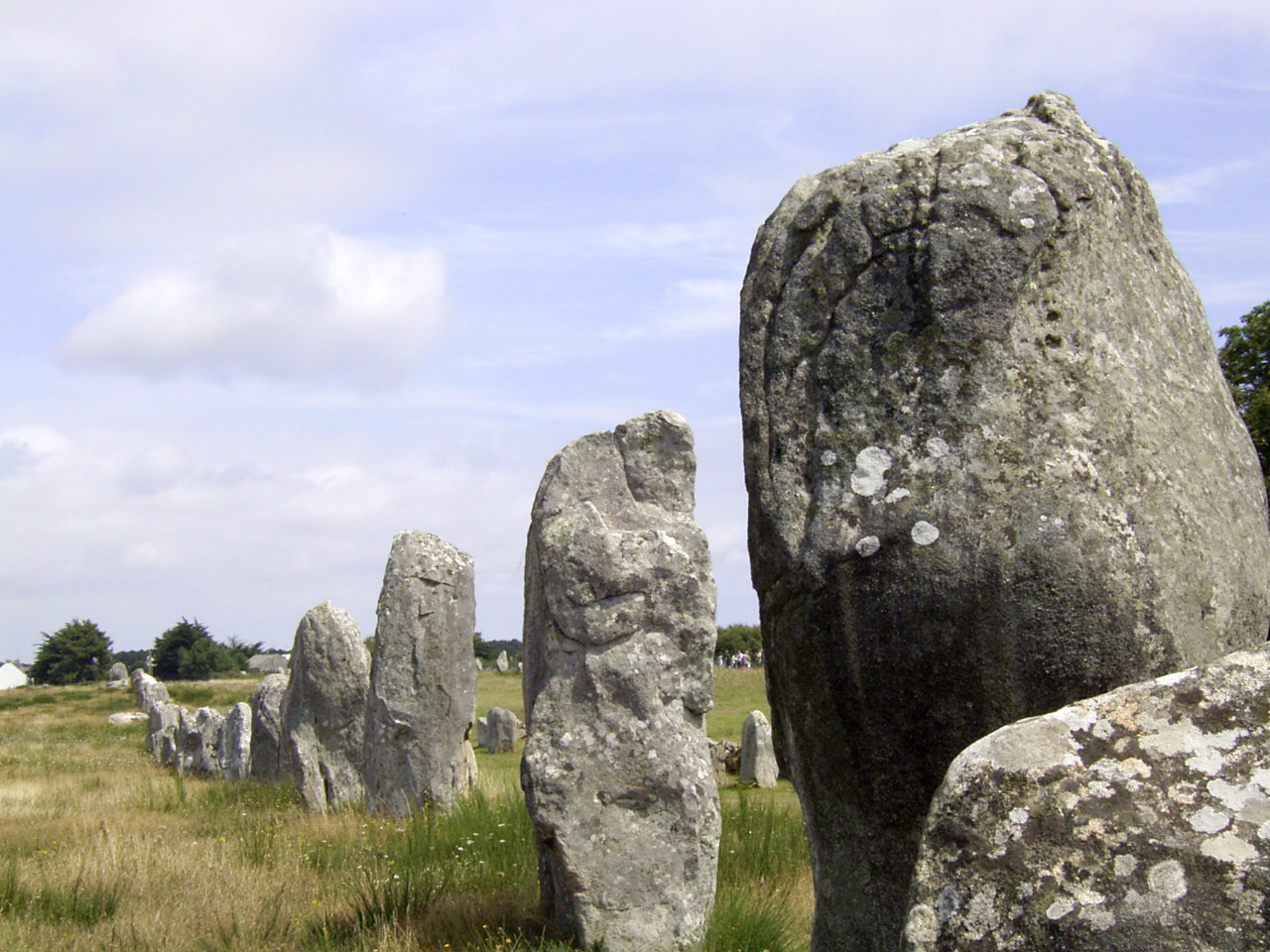
Located near the Breton village of Carnac, these massive stones were arranged and stood upright as long as 6,500 years ago.
Three of the sites feature massive stones all arranged in rows. These sites are known as the alignments and are simply rows of huge boulders balanced on end.
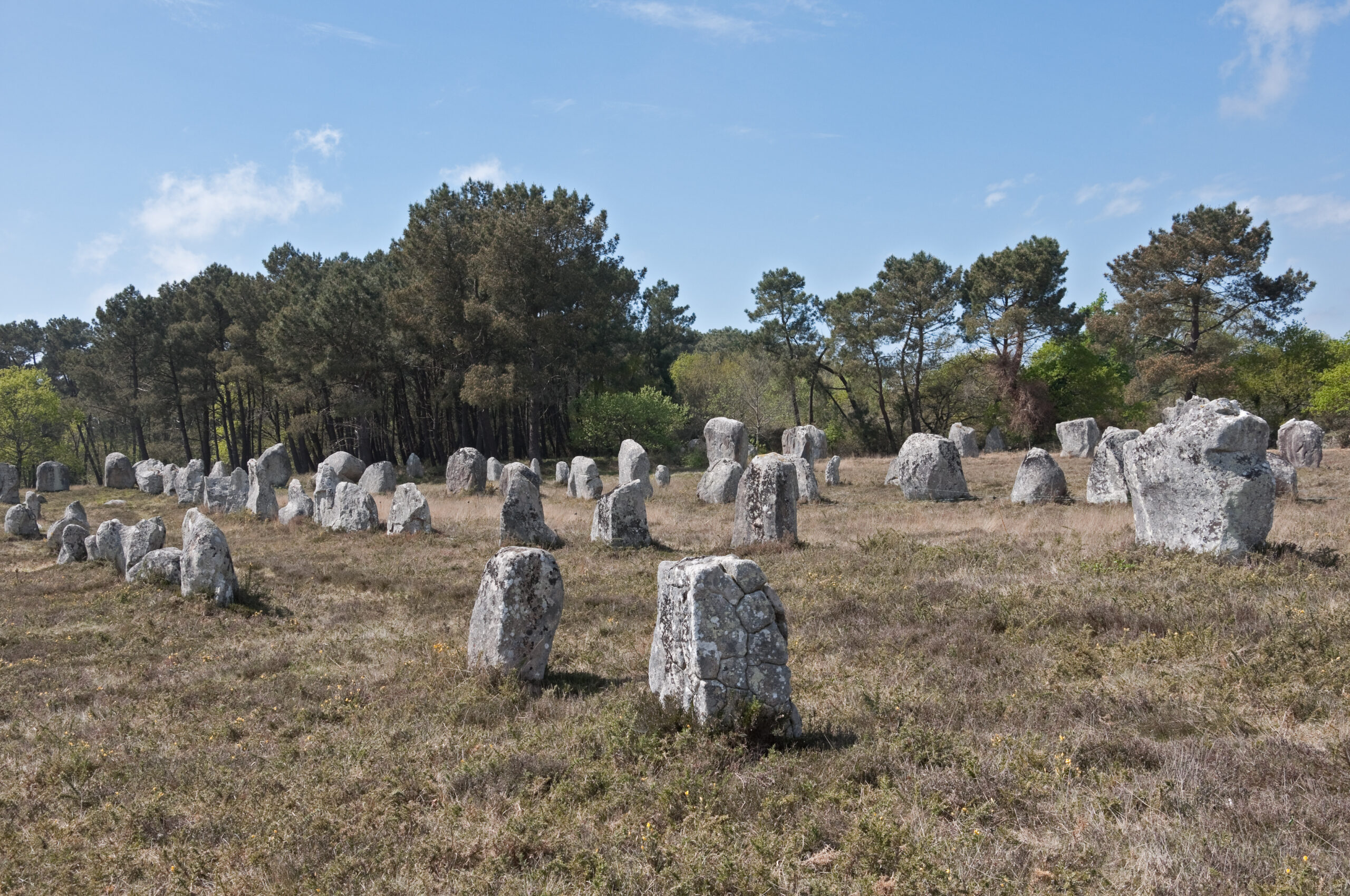
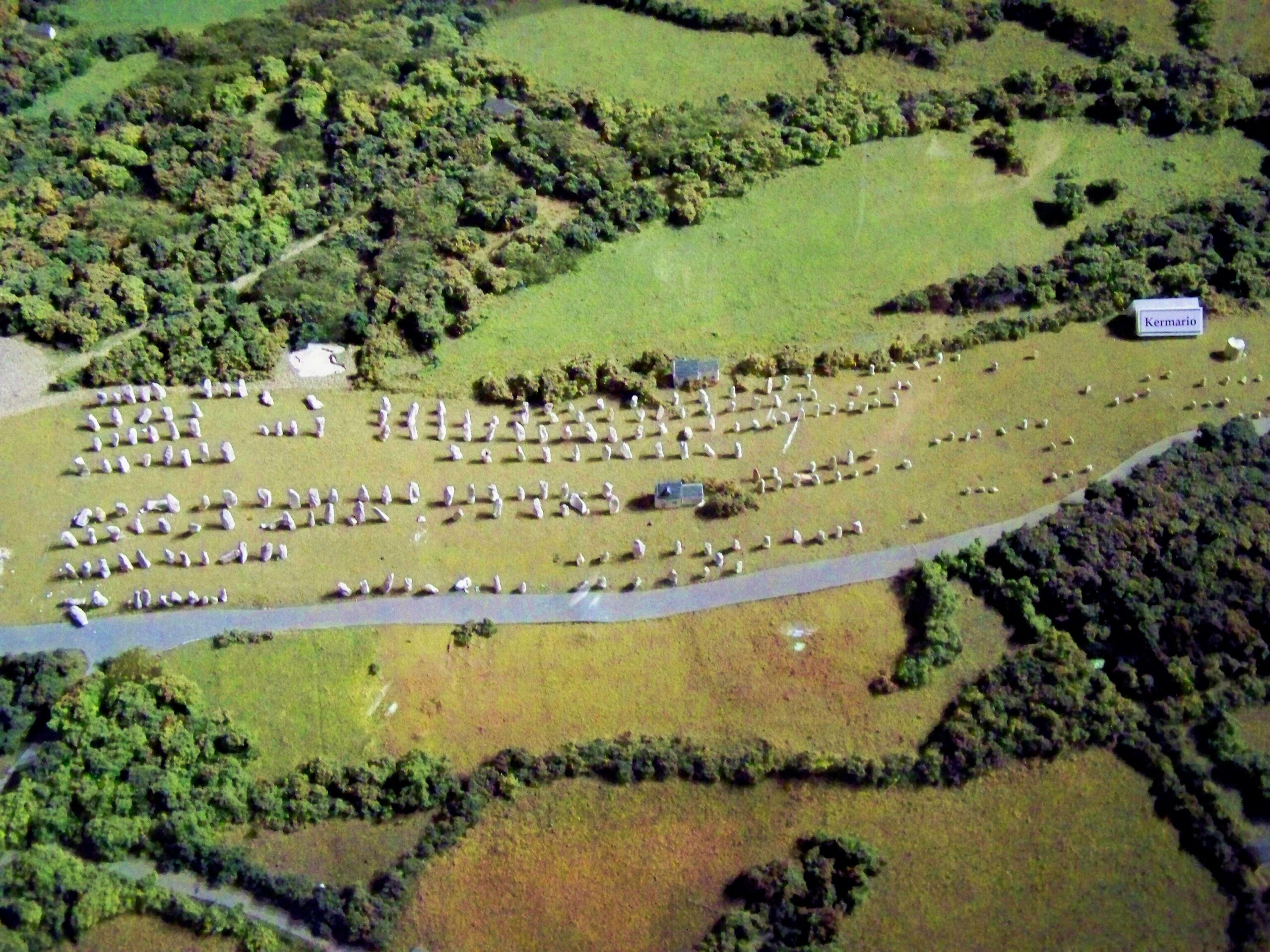
The largest is called the Menec Alignment and has some 1,165 stones. The other alignments, named Kermario and Kerlescan, have 1,029 and 555 stones respectively.
Historians believe that in the past, the collections of stones were even larger, but that some of the boulders had been repurposed for construction throughout history.
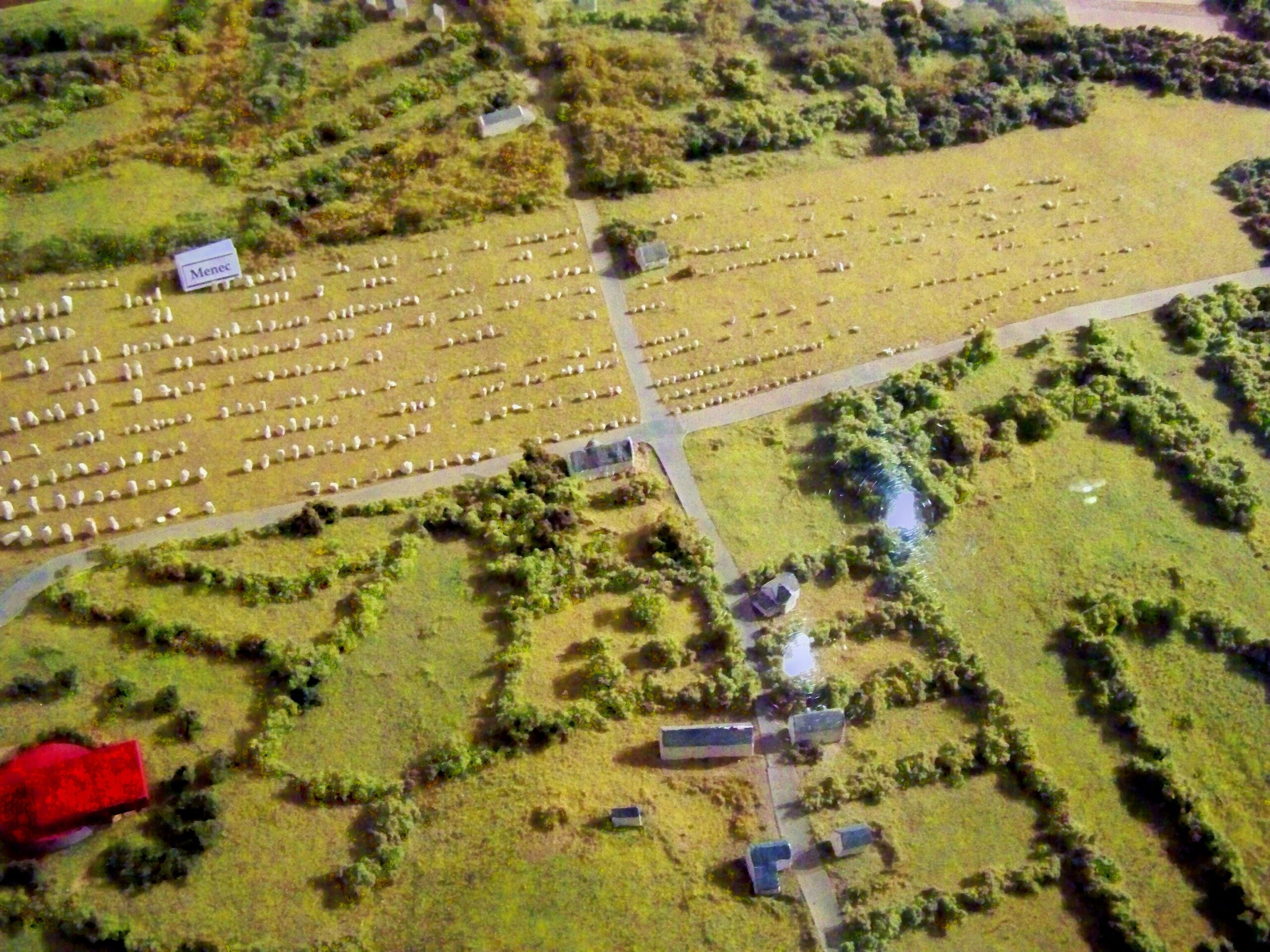
These scale models show what the alignments look like from above and you can see, compared to the buildings, the sheer size of these sites.
So why would people thousands of years ago spend so much time and energy creating these?
Well, no one really knows. The people would have been the ancestors of the Celts, but most of their culture has been lost to us after so many centuries.
We don't even know if the stones were all put up at the same time in one massive project or collected over many generations.
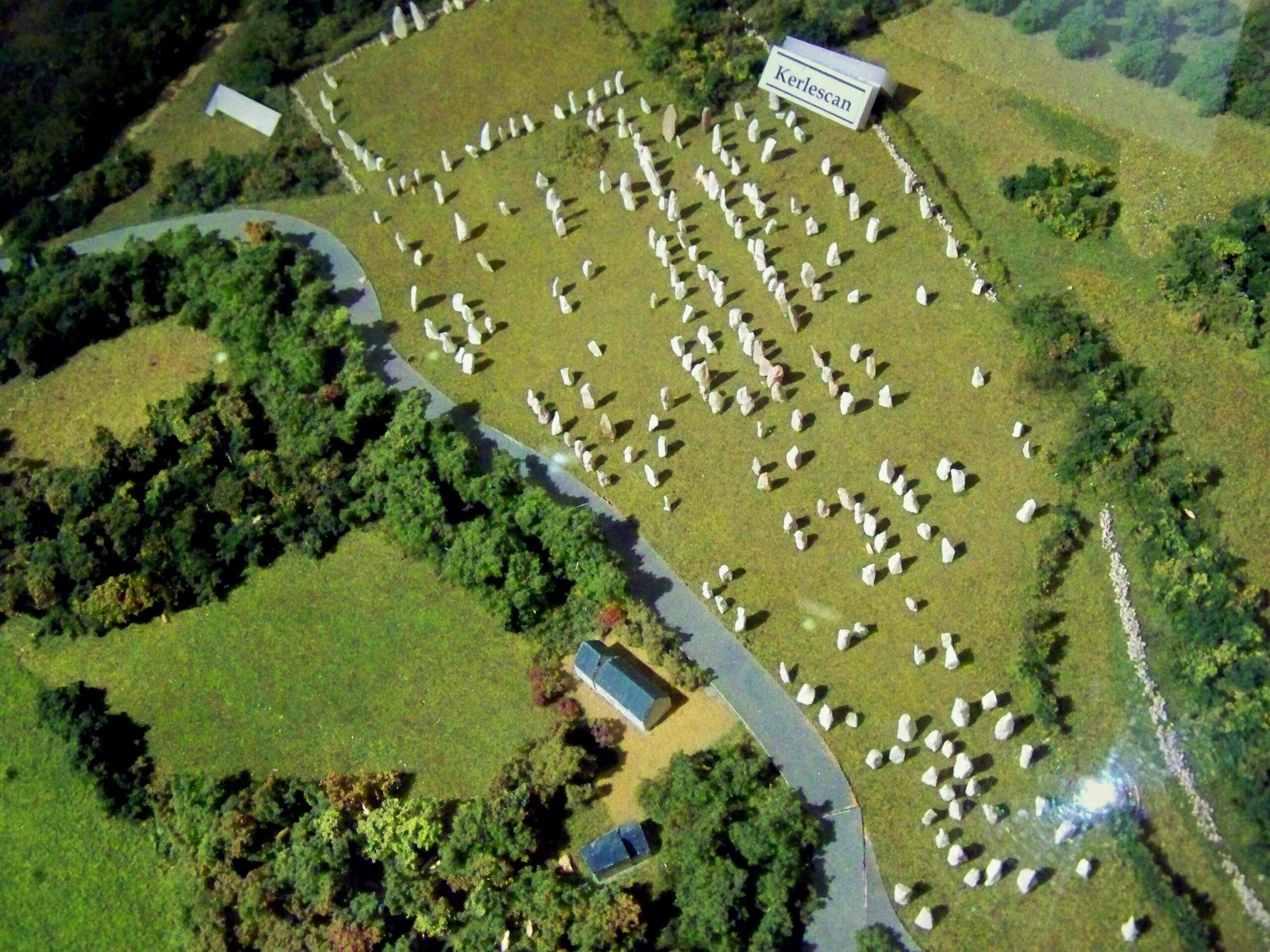
As you can see in the above model, the Kerlescan Alignment also has a rectangular section marked out in boulders up near the top of the photo. Equally mysterious!
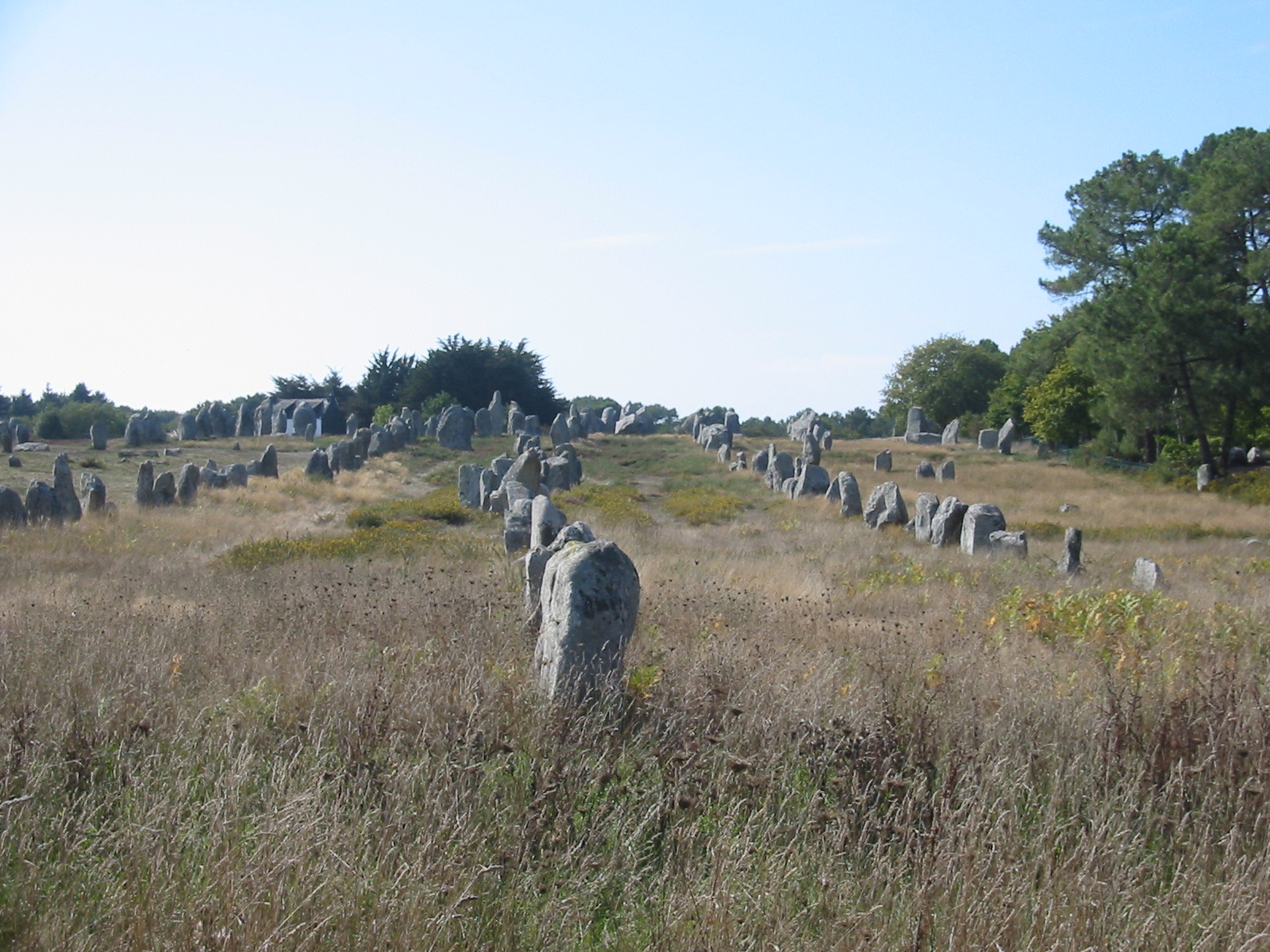
Theories range as to what the stones might have been. Some think they may have been religious in nature and used for ceremonies.
Others think maybe they mark burials, like supersized tombstones. Others think that like Stonehenge, they might have been used as a calendar or an astronomical map.
But really, no one knows! It's an ancient mystery.
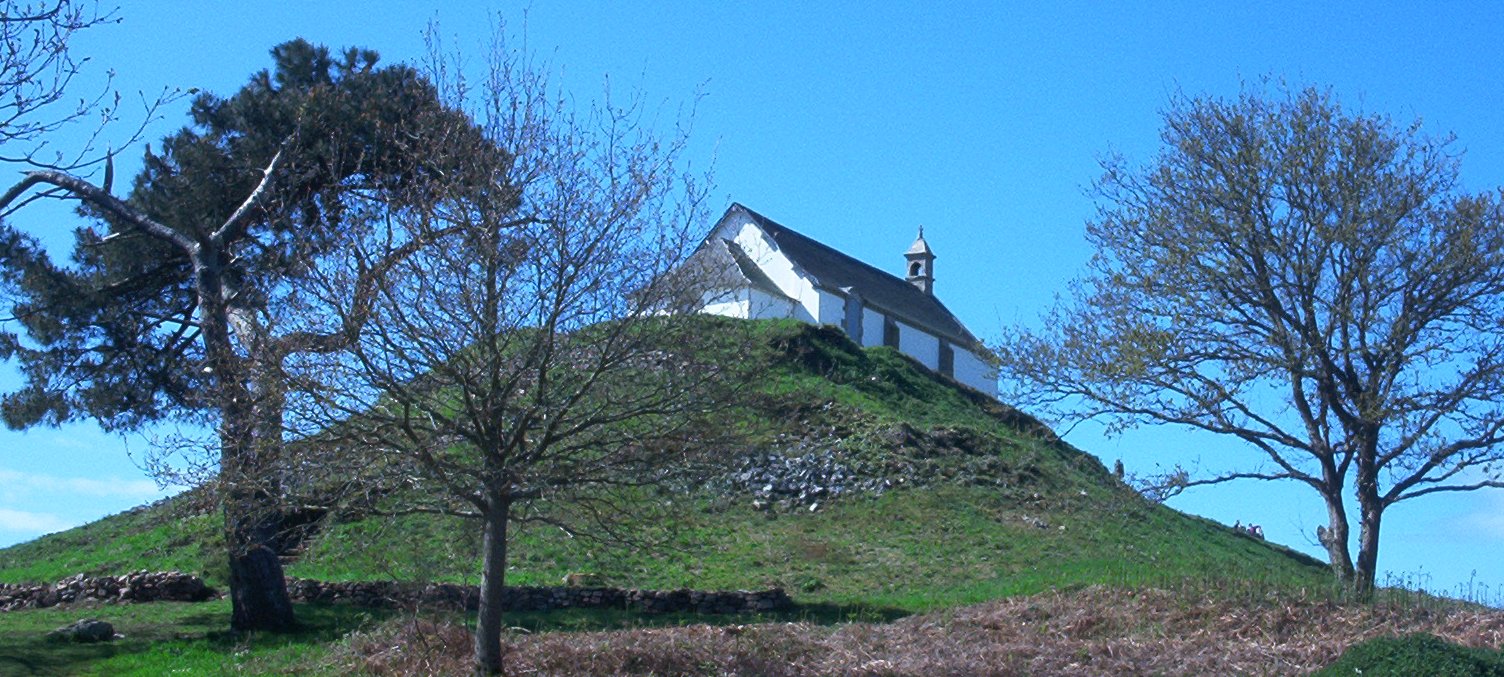
And rows of boulders aren't all Carnac has to offer. This hill is actually man-made and was the tomb of a ruler.
Like the pyramids of Egypt, the tomb contained not only a body, but jewelry, pottery, and other treasures.
A tomb with a large mound of earth piled over it is called a tumulus. Today, it's called the Saint-Michel Tumulus and is topped with a church.
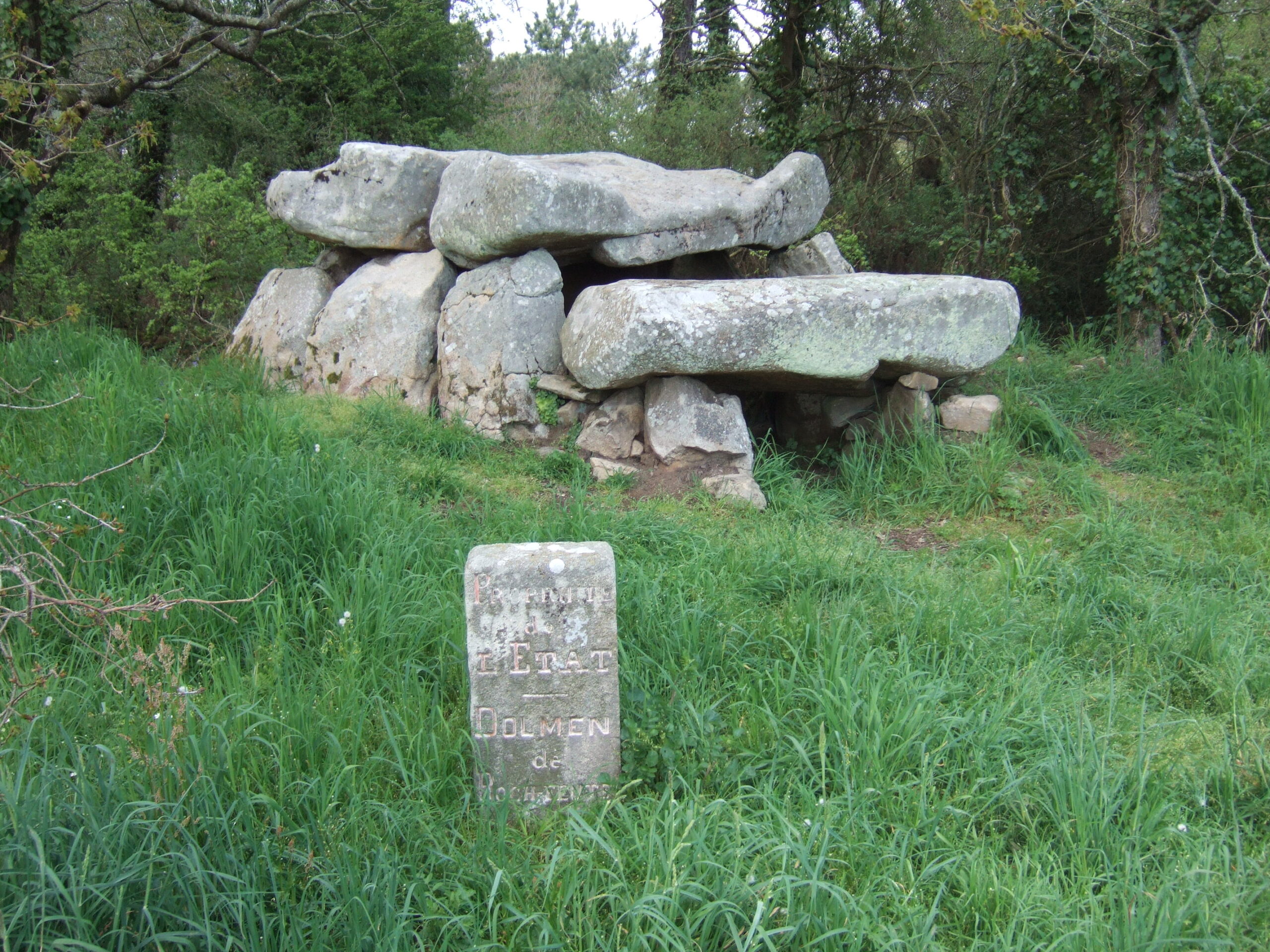
Carnac also boasts a number of these boulder huts called dolmens. These were also tombs, but smaller than a tumulus.
We'll never know who was buried in them, though. The Brittany region has very acidic soil, so any bones have long since eroded.
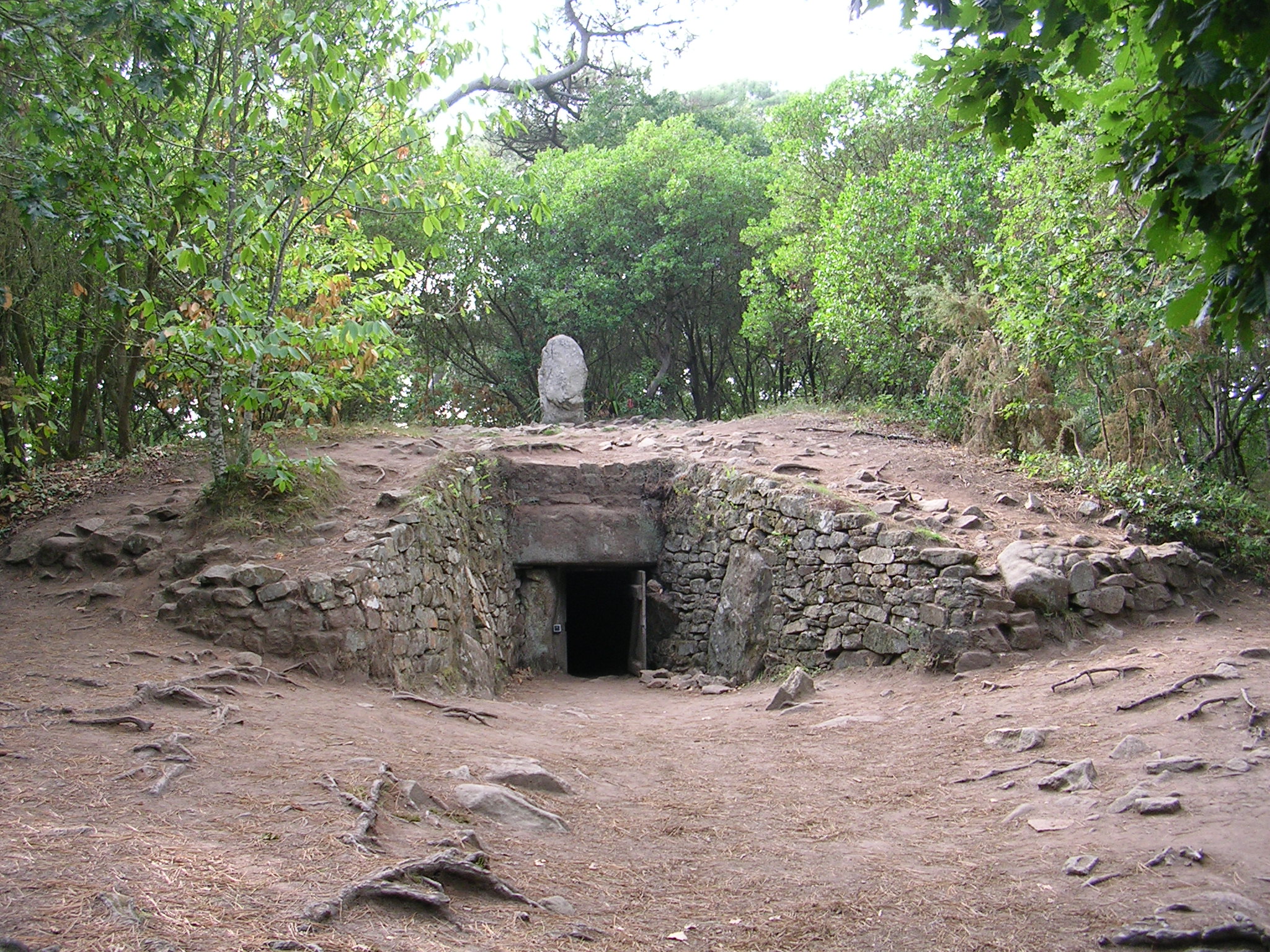
The Dolmen of Kercado is unique in that it still has its original stone walls. This tomb was built in around 4600 BCE and shows signs that it was used continually for 3,000 years.
It was also found to contain artifacts including arrowheads, axes, beads, and pearls, as well as some artwork carved into the walls.
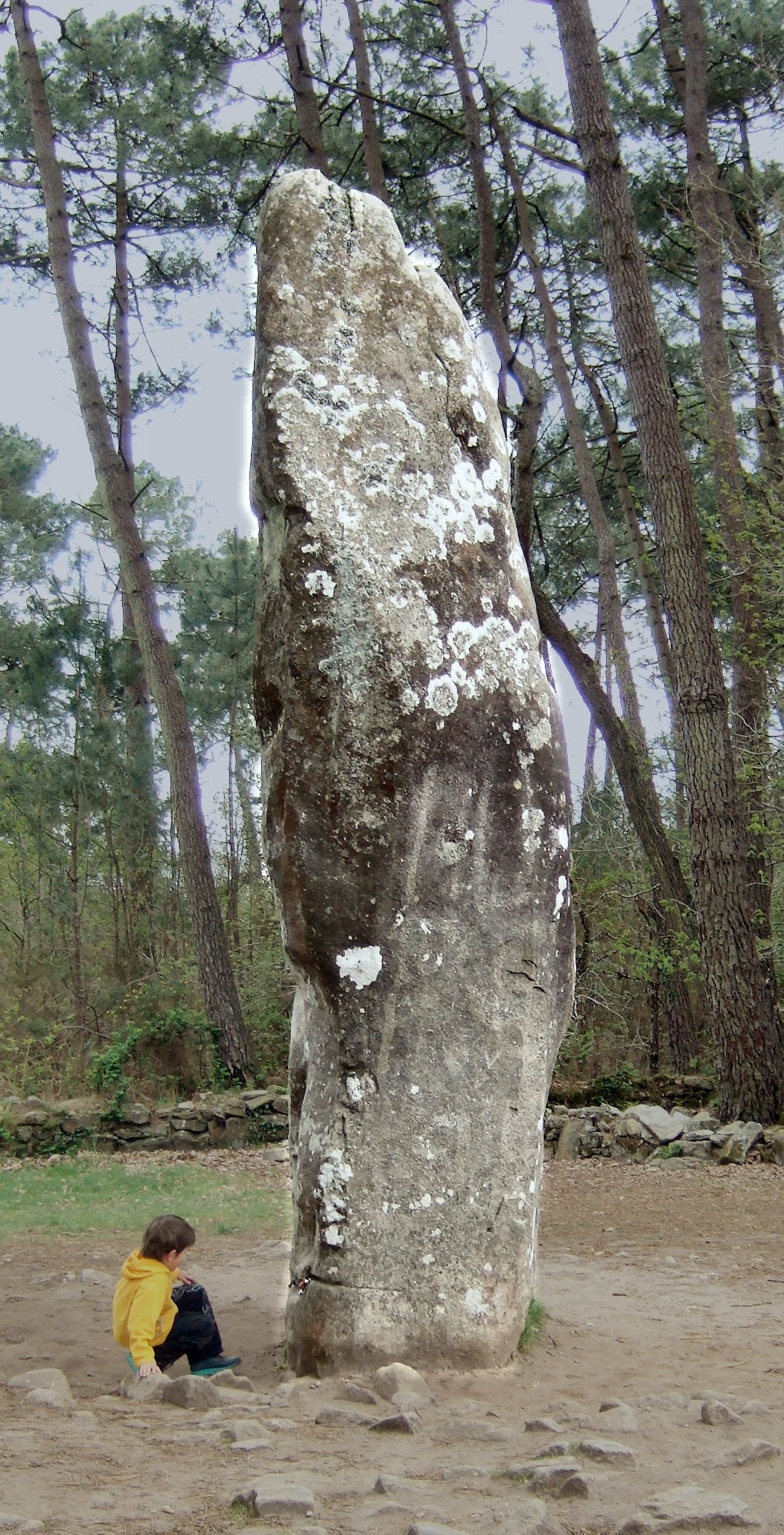
One of the largest of the stones, nicknamed the "Giant," measures 21 feet tall. Single standing stones like this are called menhirs.
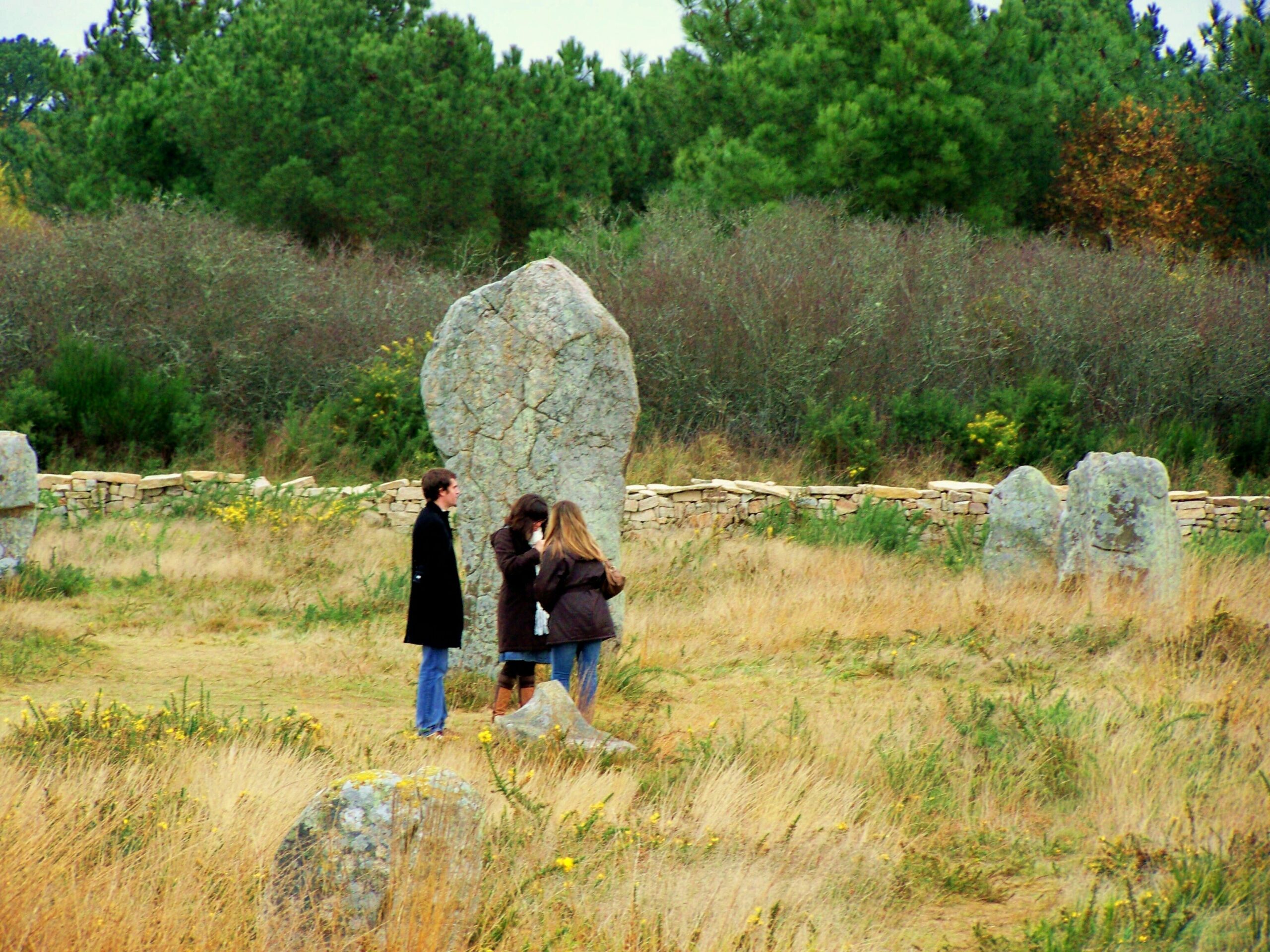
To give you an idea of how big the other stones are, here are some adults standing near one.
People have been fascinated with this site for centuries and have come up with all sorts of fantastic stories about its origins.
What do you think these were used for? Magic rites? Measuring time? Something else?
Let us know your thoughts and SHARE this ancient mystery with anyone who likes an age-old puzzle!