
Technology is helping the world move forward at an incredible pace.
Scientists are banding together to come up with innovative solutions for the world’s many ailments, like this amazing “Iodine Bindi” that’s saving thousands of lives in India by battling vitamin deficiency.
So when I heard the touching story of how one cancer survivor was beating the odds by using robot, I absolutely had to learn more.
Just a few months before Peyton Walton was set to start fifth grade, her family received devastating news: She was suffering from a rare form of liver cancer.
With so many unknowns, Peyton's family wanted one thing to remain consistent: her school life.
So now, with the help a robot named PAVS (Peyton's Awesome Virtual Self), and an amazingly supportive school environment, Peyton isn't just surviving, she's thriving — all from the comfort of her hospital bed.
Scroll through to learn how this young cancer survivor is becoming the star of her class with the help of a virtual friend.
Do you think this is an effective learning technique for children in Peyton's situation? Let us know in the comments.
[H/T: Washington Post]
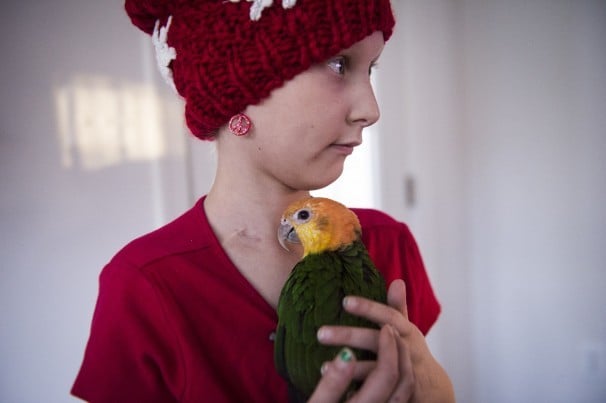
This is Peyton Walton. She's pretty much your average 10-year-old girl.
A rising fifth grader from Poolesville, Maryland, Peyton loves hanging out with her friends at school and playing with her pet bird.
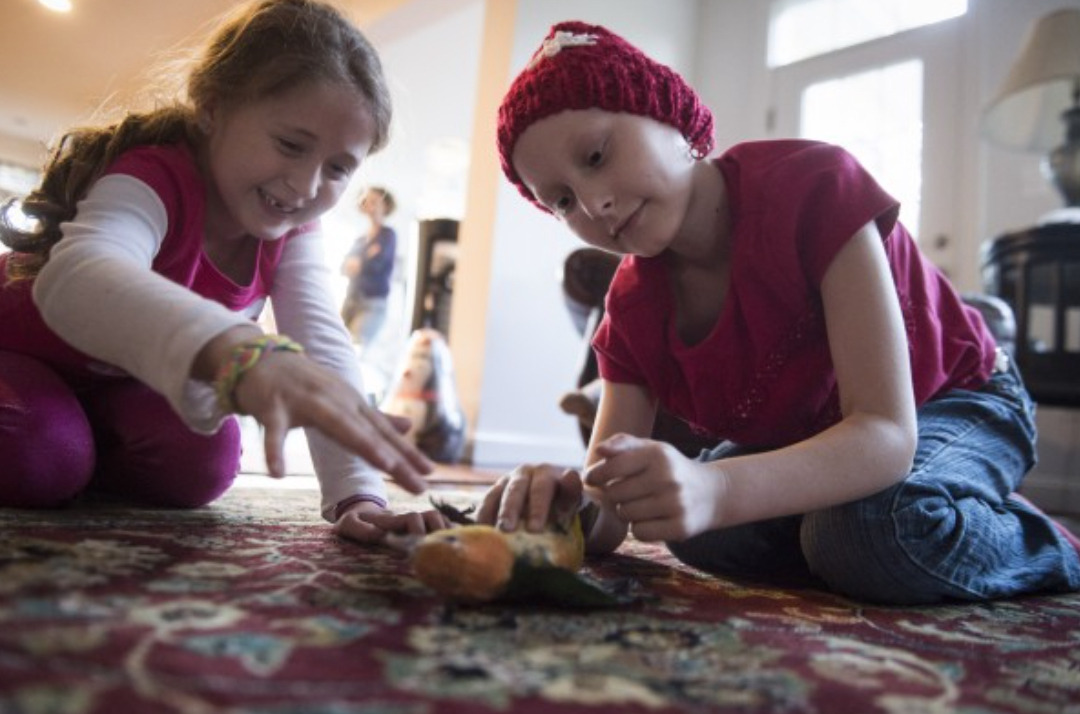
Her love of animals has sparked her interest in becoming an veterinarian, as she hopes to one day attend her father’s alma mater, Duke University, or Harvard University. She's heard both are "very good" schools.
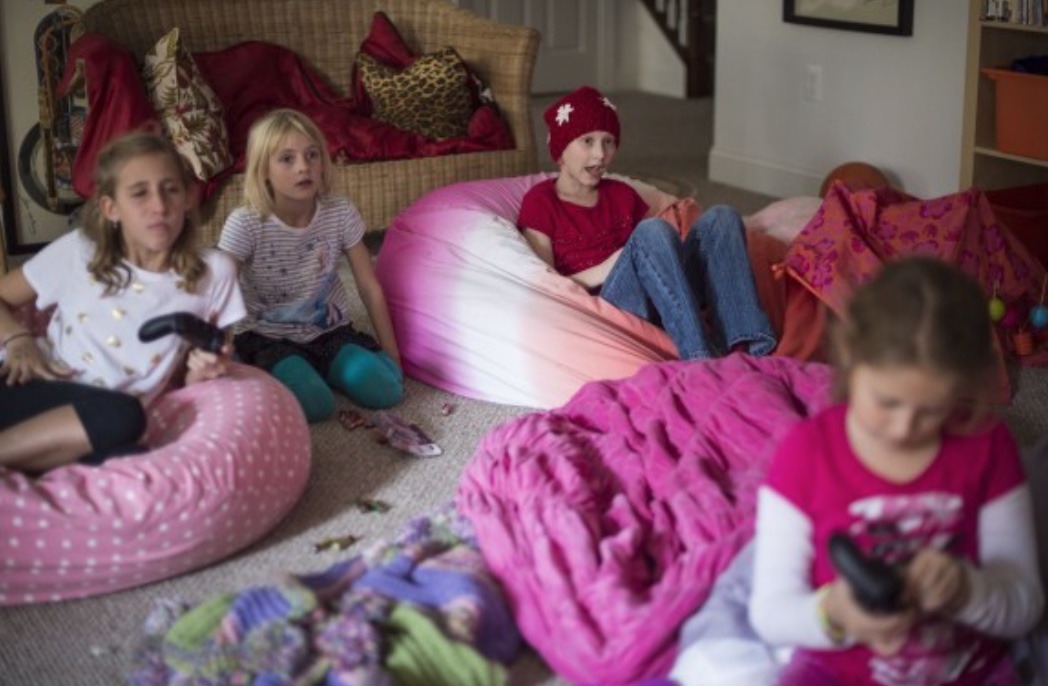
And her friends? They'd describe Peyton as funny, smart and kind. She excels at basketball, lacrosse, and loves to play video games with her best buddies.
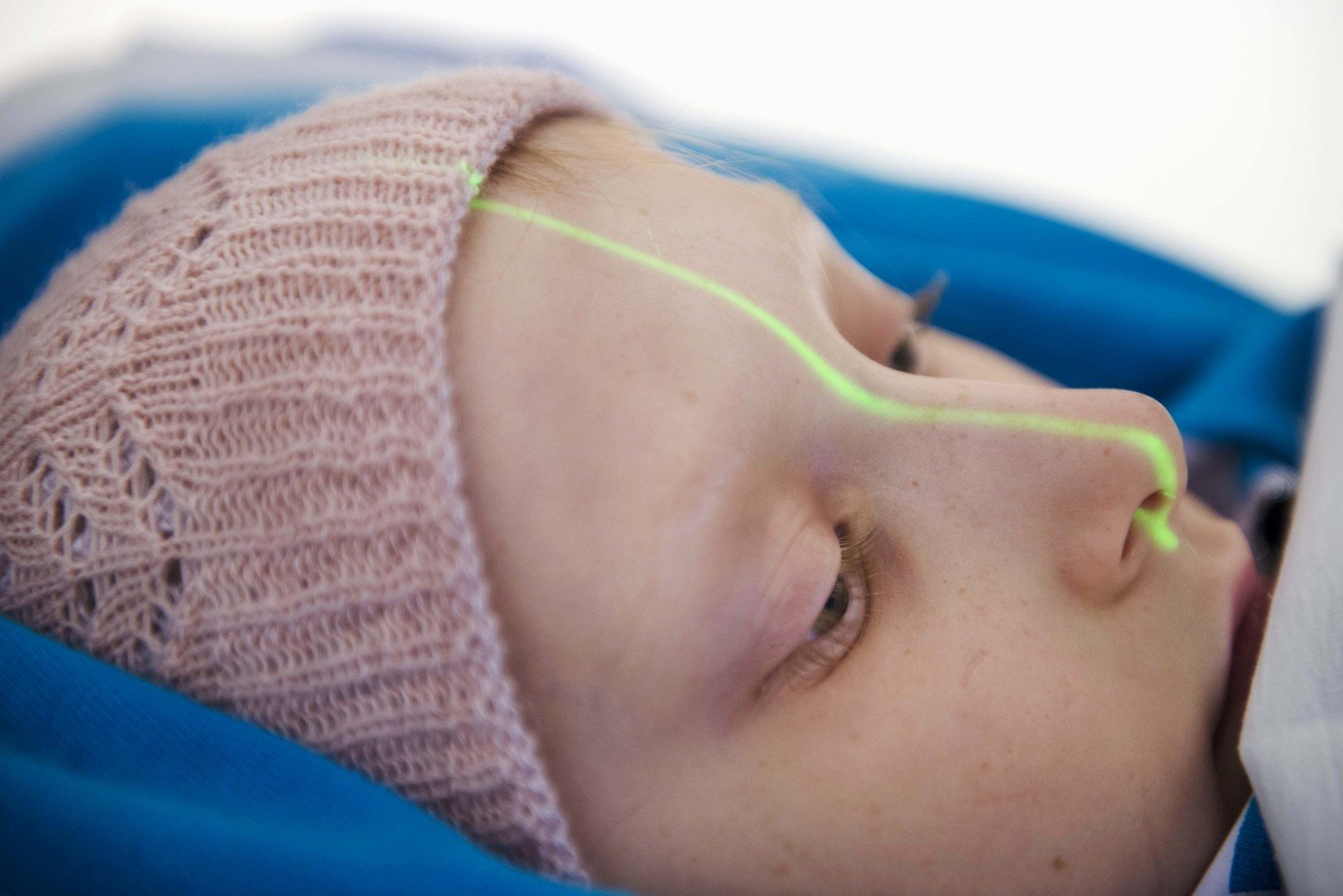
But unlike most fifth graders, Peyton is currently fighting for her life.
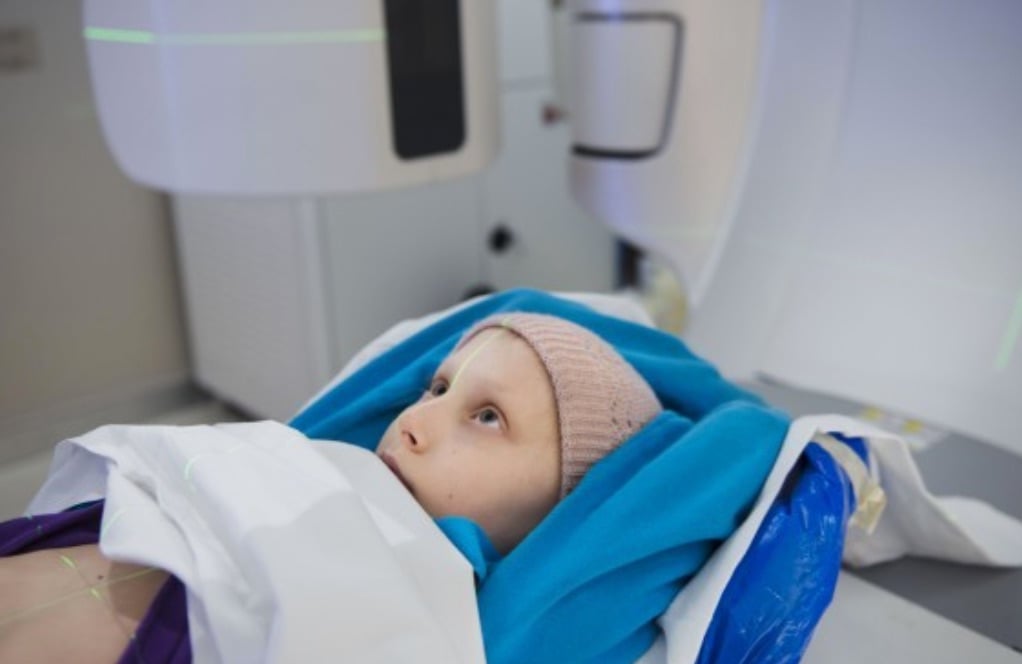
After complaining about a pain in her side, her mother noticed a bump in her abdomen. Doctors learned it was a tumor the size of a grapefruit, and diagnosed her illness as a rare sarcoma of the liver. Soon after, Peyton was given a 30 to 50 percent chance of survival.
“My heart just dropped,” her mother shares with The Washington Post.
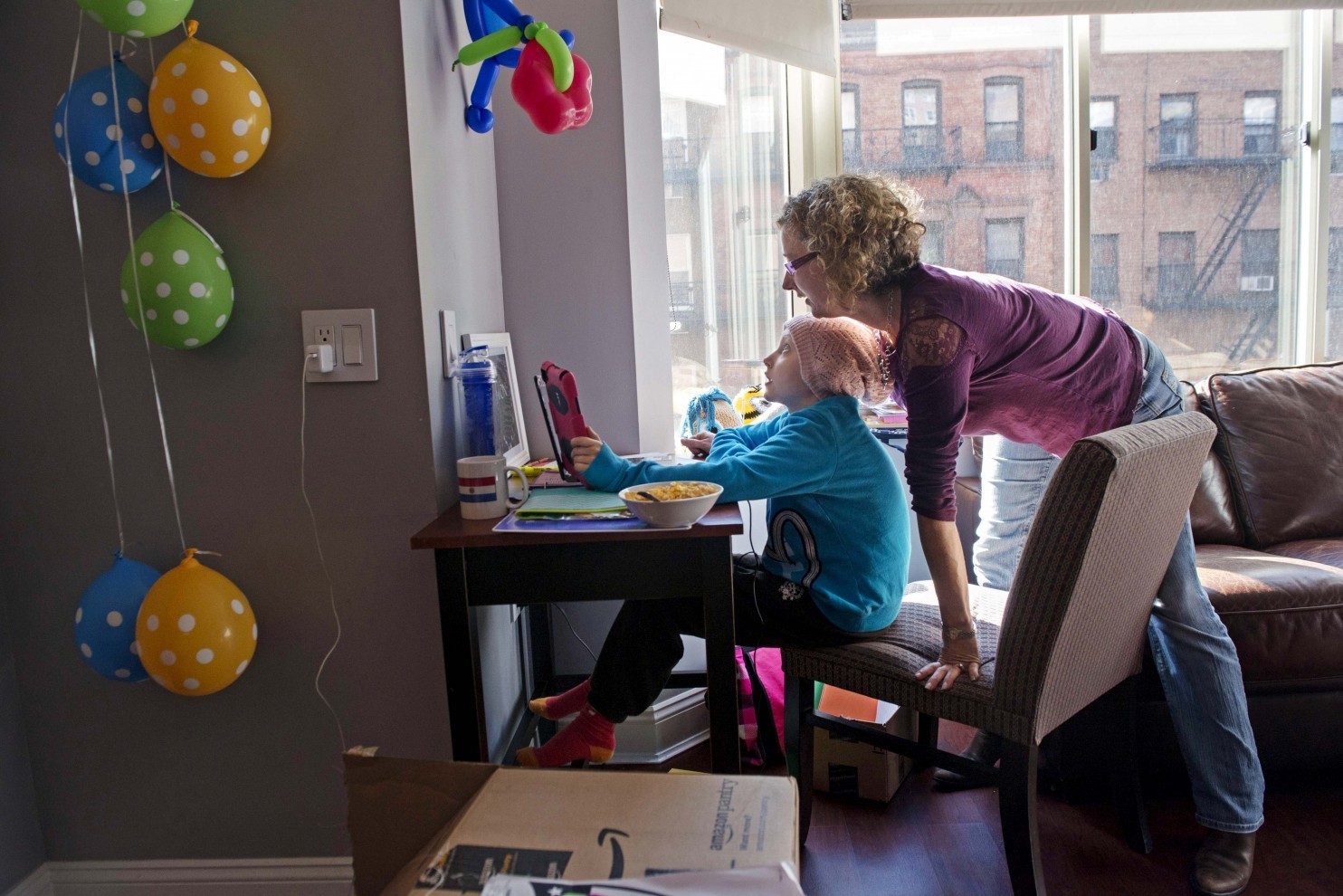
Of course, Peyton says she was pretty shocked at first, "because I never had anything serious before – just colds or a fever."
But Peyton and her family were determined to fight and win against this battle with cancer.
So they packed up and moved to New York to get Peyton the best care possible, opting for radiation, followed by rounds of intense chemotherapy.
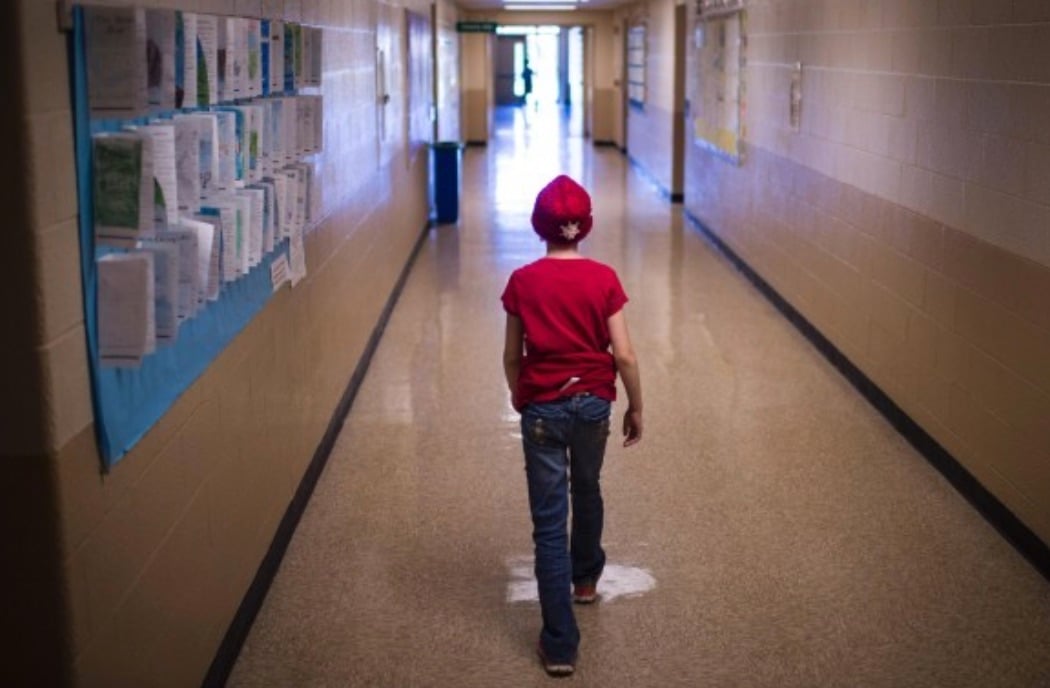
"Cancer obliterates a child’s control,” her mother, Lynn, shares with the Post. “Not knowing the length of what her life would be, I wanted every moment to be as full and normal as possible.”
This meant trying to return to life as Peyton knew it before cancer. And the biggest part of any kid's day-to-day? Lynn answers, “I knew immediately that we needed some type of technology so she could remotely access school."
Lynn had heard about two school robots in New Jersey and a lightbulb went off in her head. She knew this was the perfect solution for Peyton, who is deeply dedicated to her education.
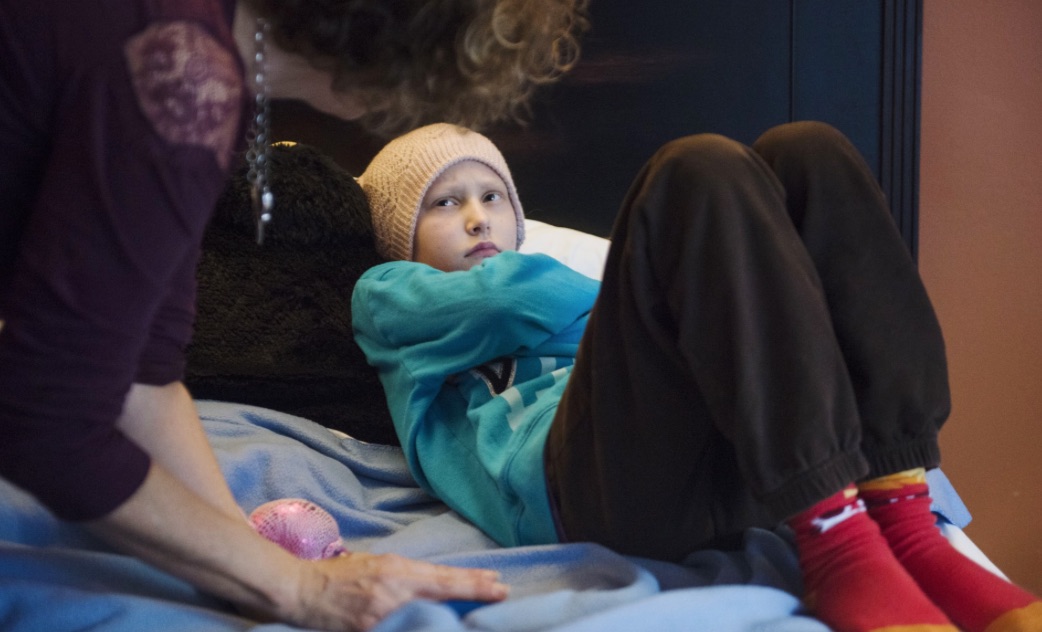
Peyton’s community got word of her struggle and wanted to help her purchase a learning robot.
The town raised money through a charity bike ride, bracelet sales and a penny “war” between the grades.
However, at the end of the day, the school’s PTA president, Rebecca Munster, ultimately purchased a robot for Peyton in the hopes it’d benefit the entire school system.
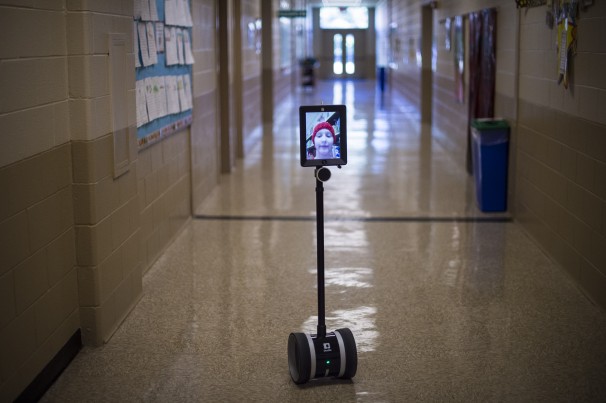
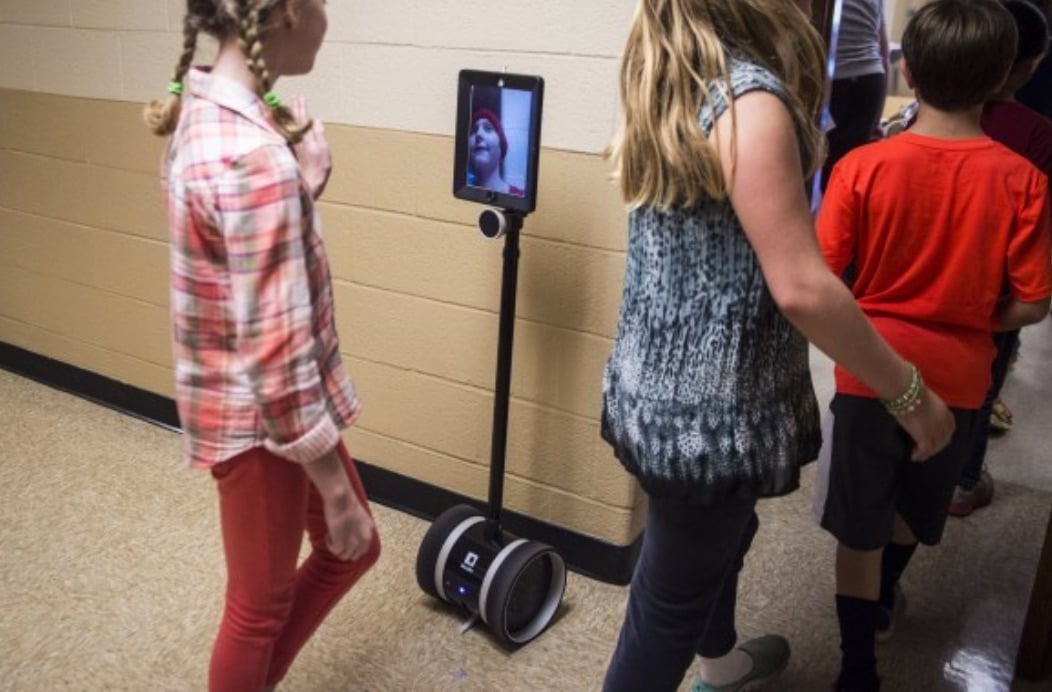
This is PAVS (Peyton's Awesome Virtual Self). PAVS is a virtual robot who can communicate between Peyton and her classmates and teachers via a raised iPad screen on a four-foot, 15-pound rolling machine.
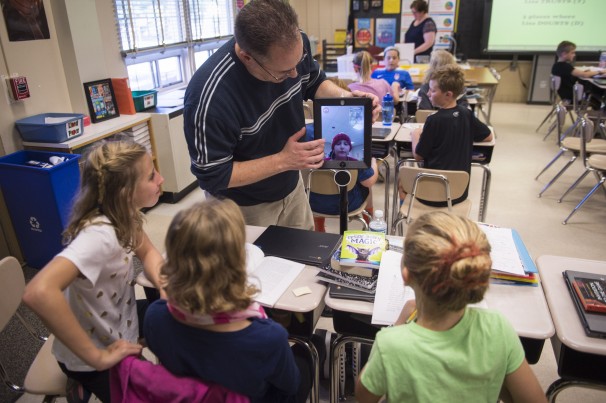
Peyton's robot allows video conferencing, so she can be directly involved in a teacher’s lesson, much like Skype or Google Hangouts.
In addition, it also encourages Peyton to be a real part of class. She can zoom in on a presentation, move to a small group discussion or turn PAVS to virtually "walk" around the room.
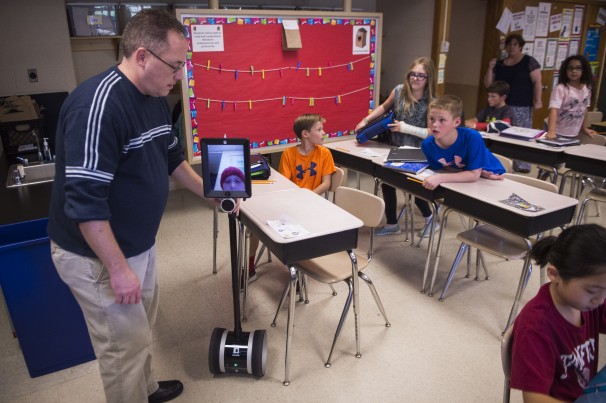
"I get to go to school, but not actually be there – but it's something like actually being there," Peyton shares with The Washington Post.
"I really like math and science, so I just like being there and learning what they have to teach me,” the fifth-grader notes.
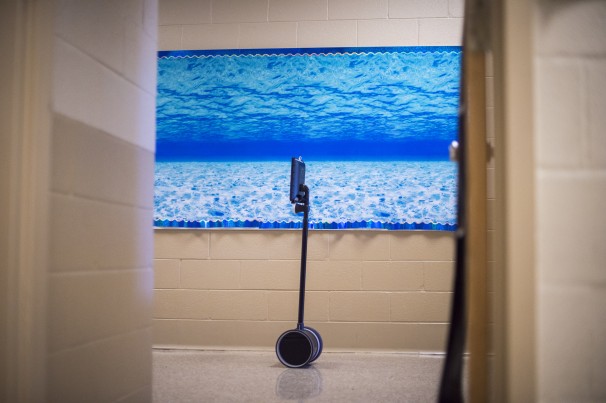
The experience of having robots as a proxy for chronically sick students is being studied by officials in Peyton's school district, where the technology has become part of a pilot program.
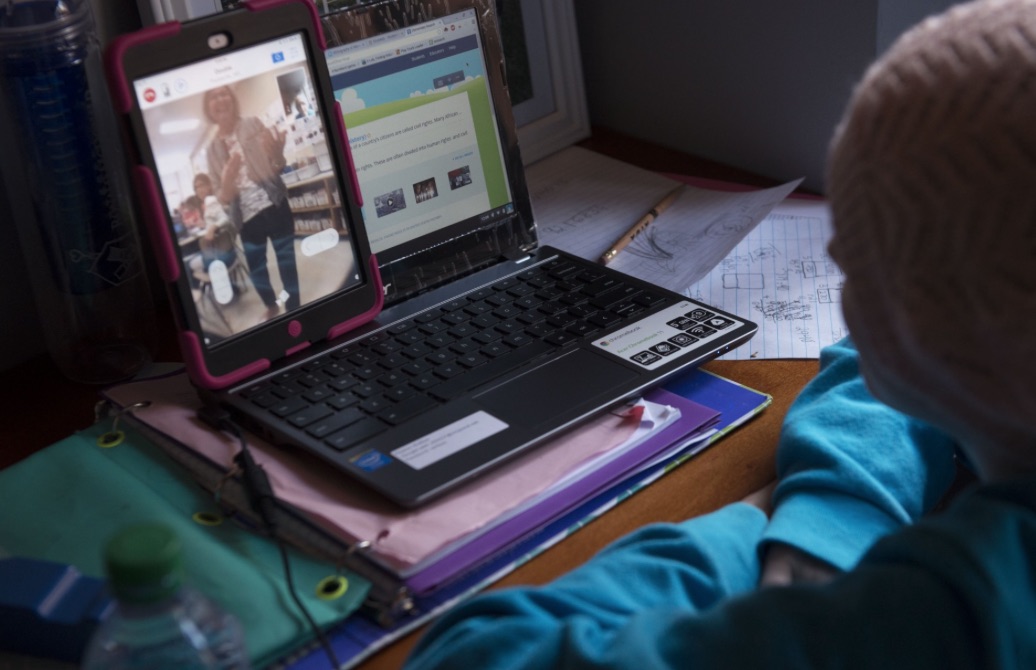
"It’s really cool,” says fellow classmate, Tilly Gaughan. “She’d probably get a little bored in the hospital and get a little sad not seeing her friends.”
With the robot, “she can do school and still have fun, seeing her friends and stuff."
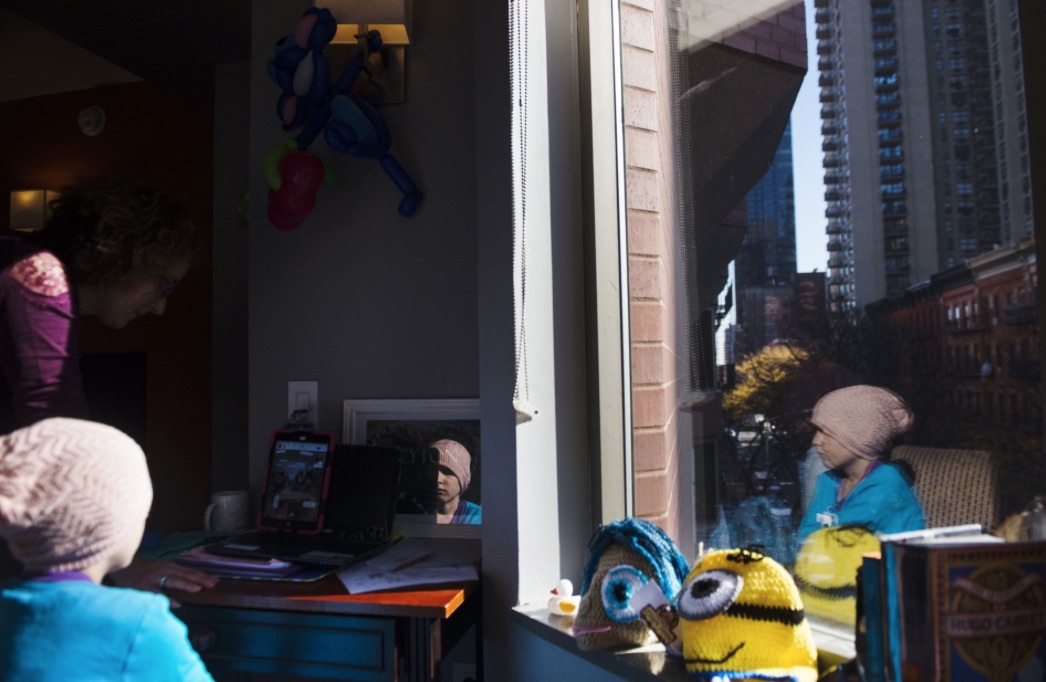
Peyton can chat with classmates, even giving them a virtual high five or wave.
Her mother says the robot’s importance goes beyond education; it’s also a crucial way for Peyton to connect to her social world outside the hospital and to help battle the isolation that comes with any serious illness.
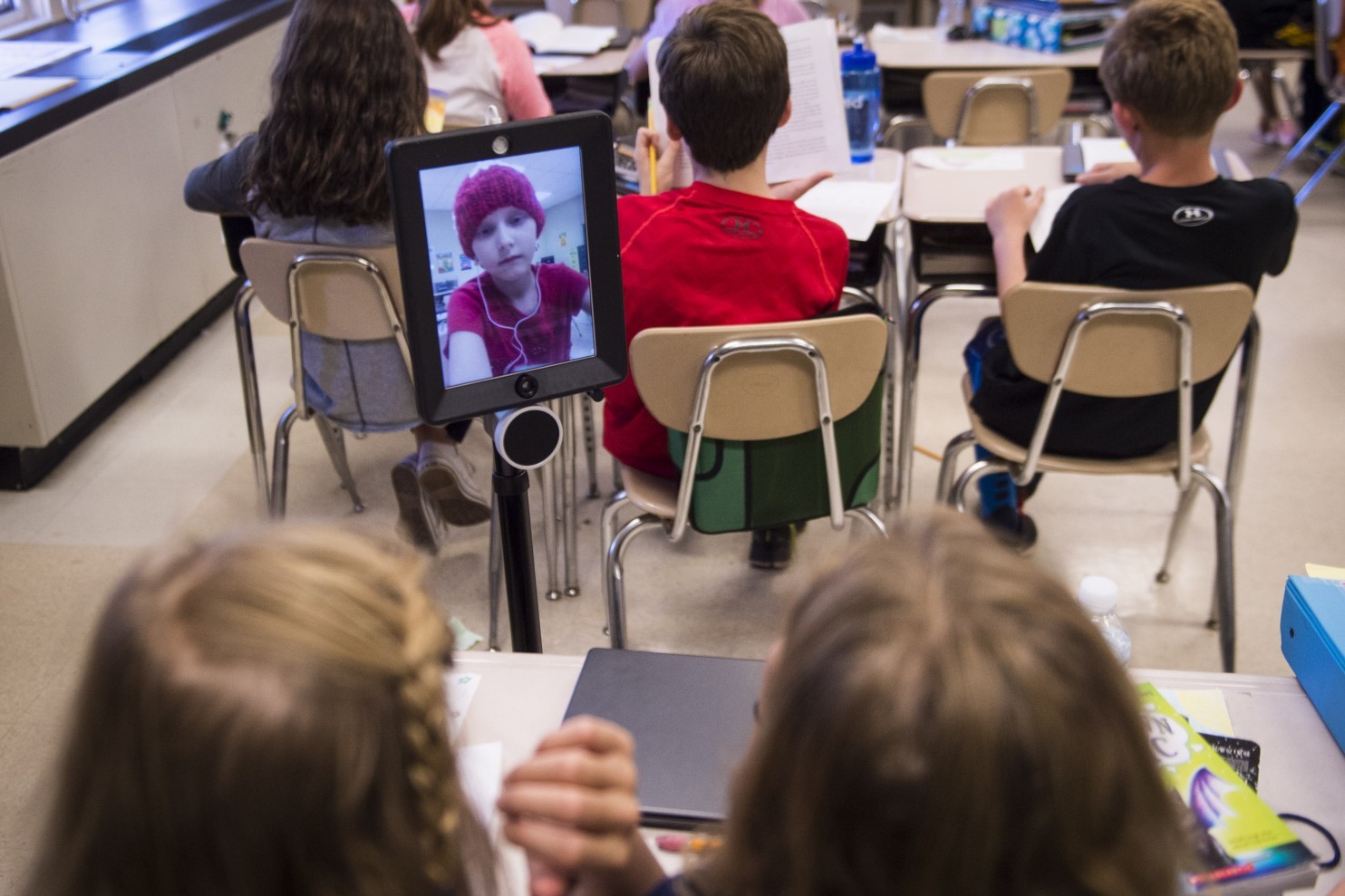
"We really are just beginning, and we are learning a lot,” Kara Trenkamp, the district’s director of technology integration and school support, shares with the Post. “The initial start has been very positive."
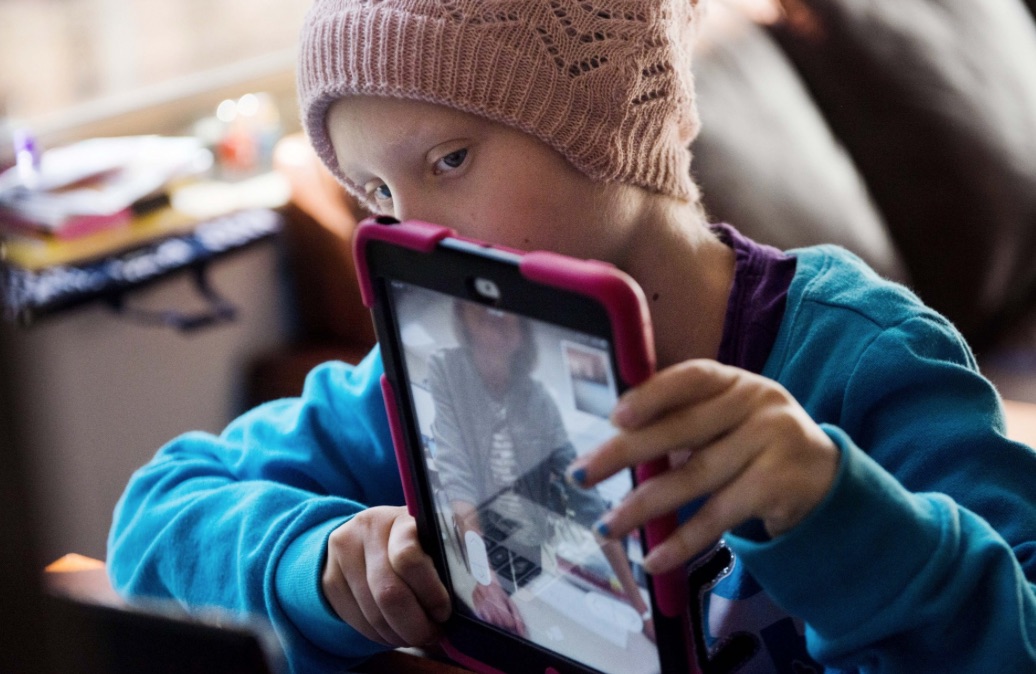
And Peyton’s doctors agree. PAVS is the first time they’ve seen a patient interacting with this kind of device in a school setting.
“I think it’s a really exciting technology that could potentially benefit lots of kids,” notes AeRang Kim, a pediatric oncologist at Children’s National Health System.
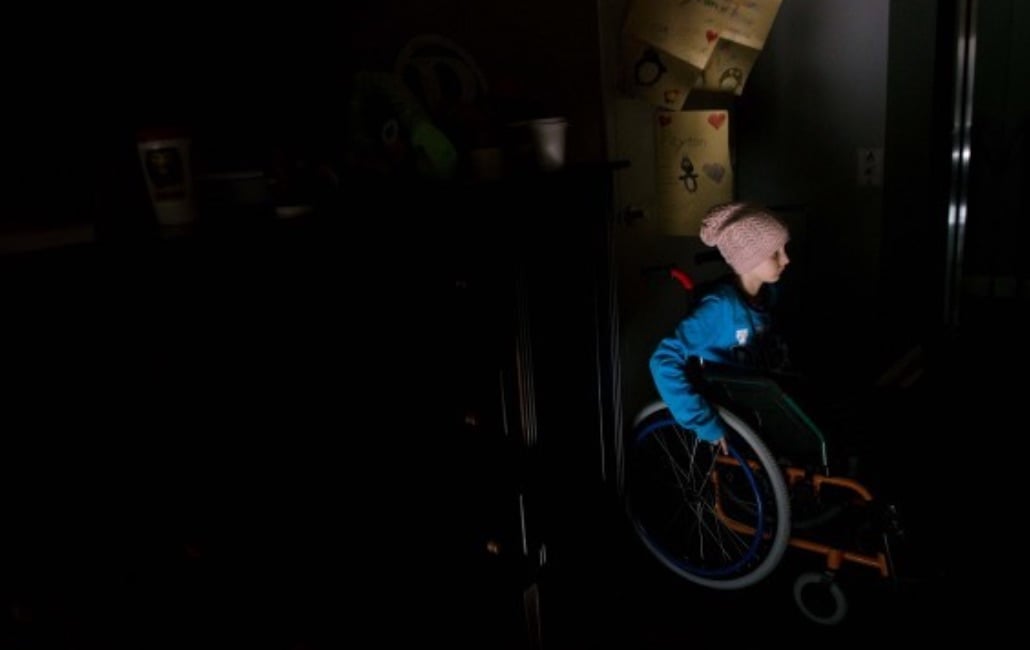
And Peyton has found her robot surprisingly easy to manage. She controls PAVS in much the same way she plays video games on her iPad.
“I play games that are something like this . . . so it’s pretty simple."
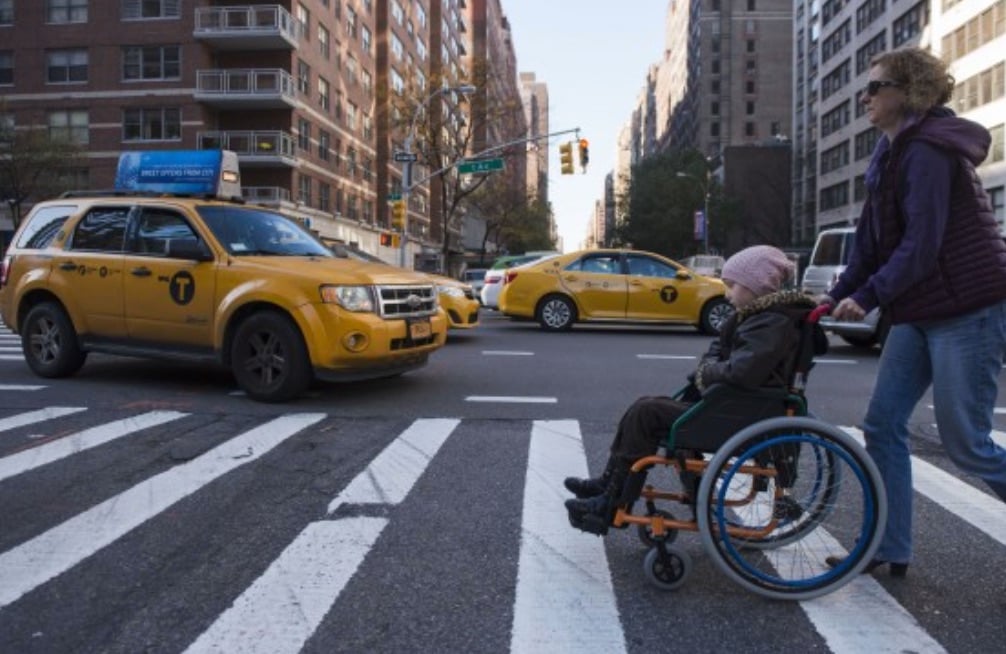
Even though Peyton is hundreds of miles away in NYC, she's managed to make a huge impact on one person in particular: her teacher, Sharon Zgoda.
“Ms. Z,” as everyone calls her, is also a cancer survivor and has made a point of taking Peyton under her wing.
"I asked to have her in my class because I really thought I could help her and her family through this journey," Sharon tearfully shares with the Post.
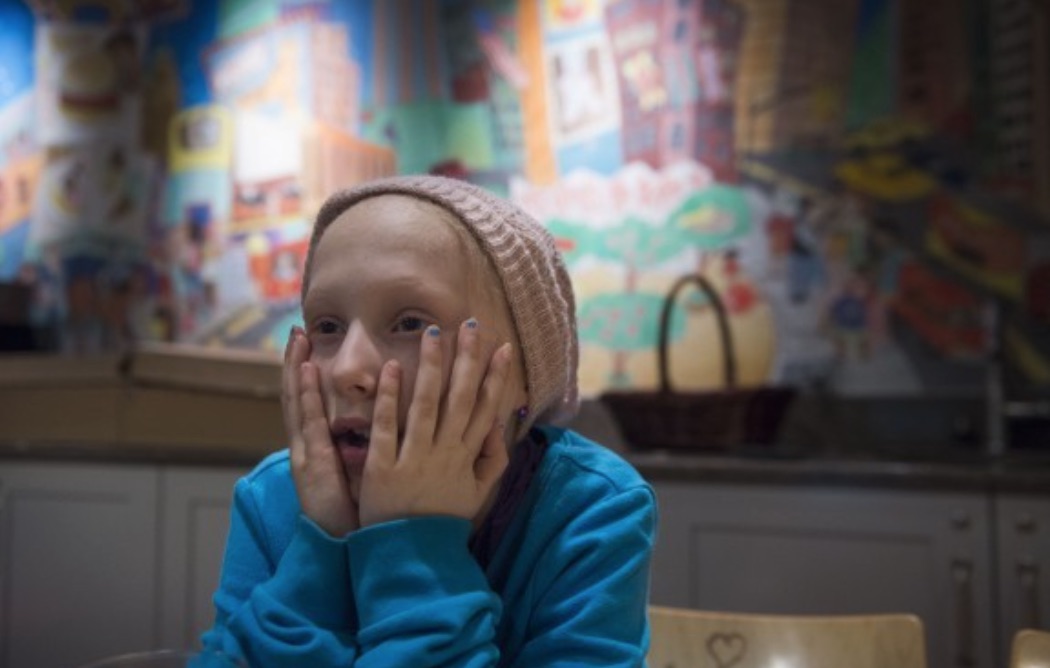
Her teachers, like "Ms. Z," will typically set up the robot in her first class. Peyton will then move it within the classroom. They said that it's pretty simple.
However, there are sometimes computer glitches: a lost connection, video delays. At times, Peyton will unintentionally send the robot into a wall or a desk.
But these issues are easy to course-correct.
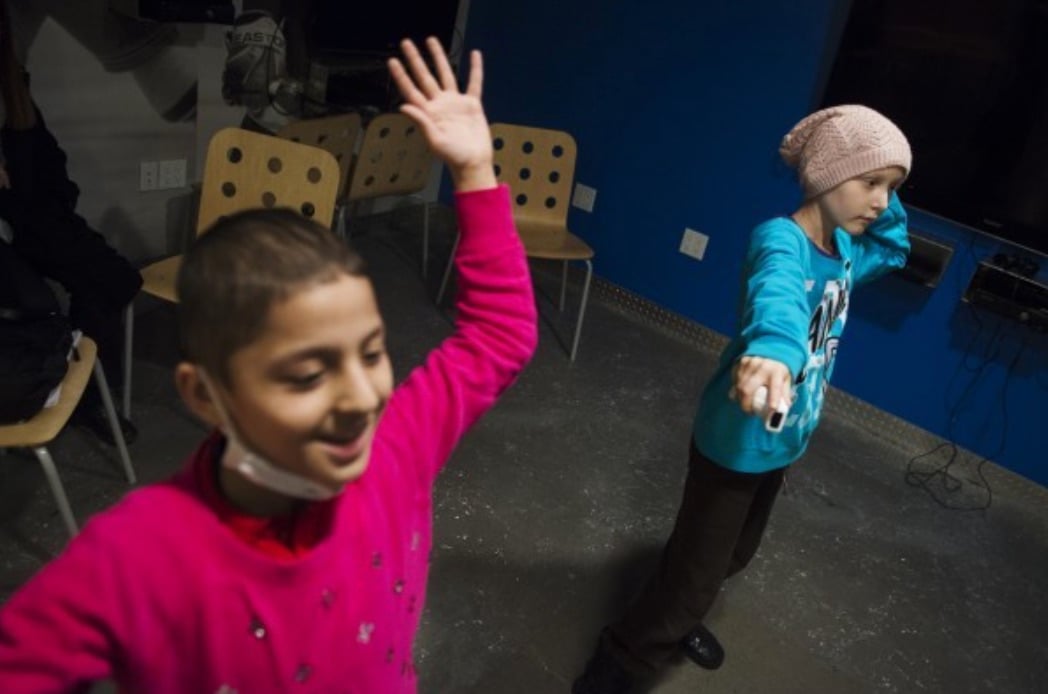
Mostly, class runs smoothly and efficiently.
Despite the slightly awkwardness of interacting with a robot, Peyton's school principal believes in continuing her education above all else.
"In a very challenging situation, a life-changing situation, what can we do to provide her with a sense of normalcy so that when she needs these treatments, she’s not being stripped of everything?”

"Telepresence Robots" like PAVS have been popping up across the country, with Peyton's mother advocating for other school systems in her district to follow suit.
Though Satyandra K. Gupta, director of the Maryland Robotics Center at the University of Maryland, says that it might take time before telepresence robots become common in schools, Peyton's family is optimistic.
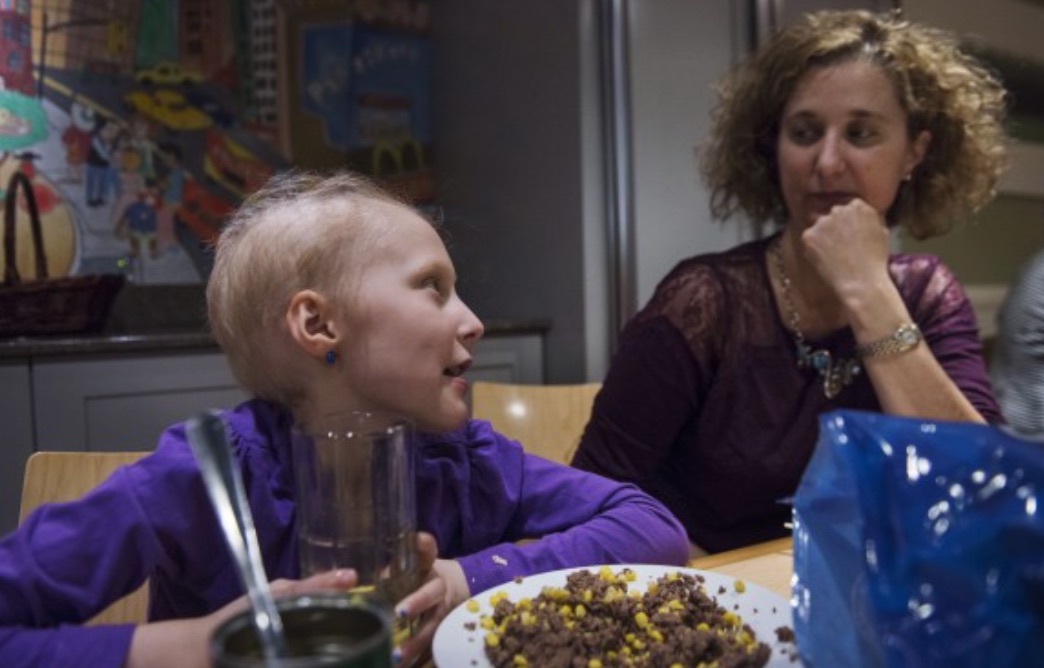
Meanwhile, Peyton is maintaining the close relationship she's formed with her school friends and teachers and hopes to be back in class as soon as possible.
Lynn sees this experience through an even larger lense, "If sitting next to a robot at fifth or sixth grade can inspire one kid to find the cure to cancer, it will have been worth it."
Peyton's incredible story is larger than one child fighting for her right to education during an illness; it's about revolutionizing the way we look at learning and connect outside the classroom.
What do you think about Peyton's story? Let us know in the comments.
Please SHARE if you were as inspired by this story as I was!