
When you imagine dinosaurs, you might imagine the huge, lizard-like beasts from movies like Jurassic Park. They're scaly, cold-blooded, and not exactly the cutest or cuddliest of creatures.
Contrary to that image, recent evidence has suggested that these ancient animals might have been a little fluffier than we might have previously imagined.
Thanks to a little bit of tree sap, we don't have to just imagine what dinosaurs might have looked like anymore. We can actually see them with our own eyes, just as they appeared millions of years ago.
Paleontologist Lida Xing from the China University of Geosciences made a shocking discovery at an amber market in Myanmar: a piece of a dinosaur's tail encased in the petrified ancient sap, full of fluffy and fabulous feathers.
Dinosaurs are fascinating to people of all ages, and they also teach us a lot about the history of Earth, how creatures evolve and die out, and even what the future might hold for our planet and the life on it. Plus, you know, dinosaurs are pretty awesome!
The piece of tail embedded in the amber is nicknamed "Eva," and is described as being about the size of an apricot. It's believed that the tail once belonged to a juvenile coelurosaur, an ancient ancestor of today's birds. Fun fact: birds are the only dinosaur group that still roam the earth today. Pretty crazy when you think about it!
People have speculated about feathered dinosaurs for years, but this is the first time we've been able to see feathers still intact on part of a dinosaur's body. It means that scientists now have more information about how these dinosaurs looked, how their feathers were actually arranged, and how modern birds have evolved over millions of years.
[H/T: Treehugger, Ars Technica]
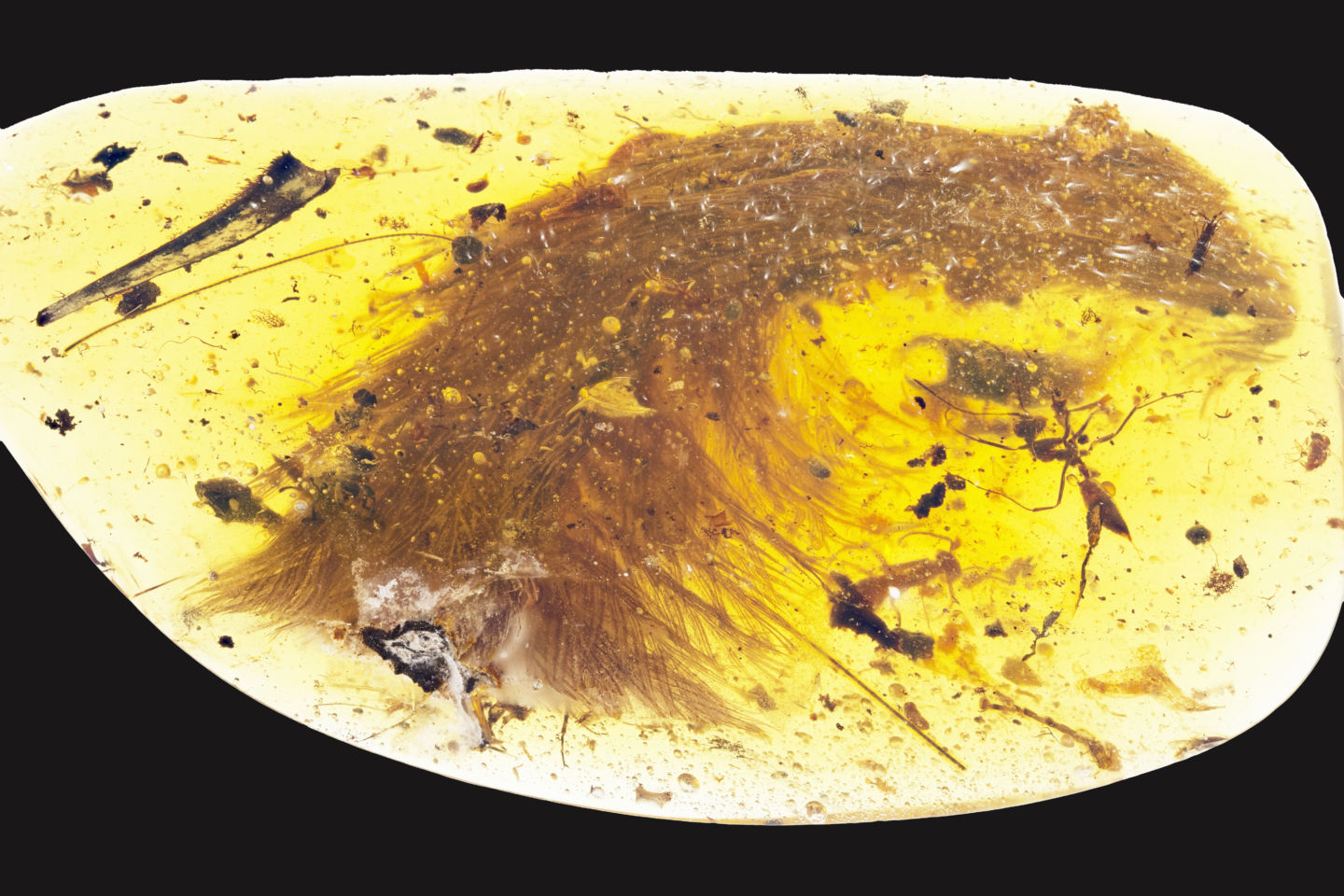
In an amber market in Myanmar, paleontologist Lida Xing found this apricot-sized piece of amber.
Inside it was something that no one had seen for 99 million years: a piece of a dinosaur tail with feathers fully intact.
It was a jaw-dropping find. It might not look like much at first, but on closer inspection, it's basically the closest thing to a photo from 99 million years ago that we have.
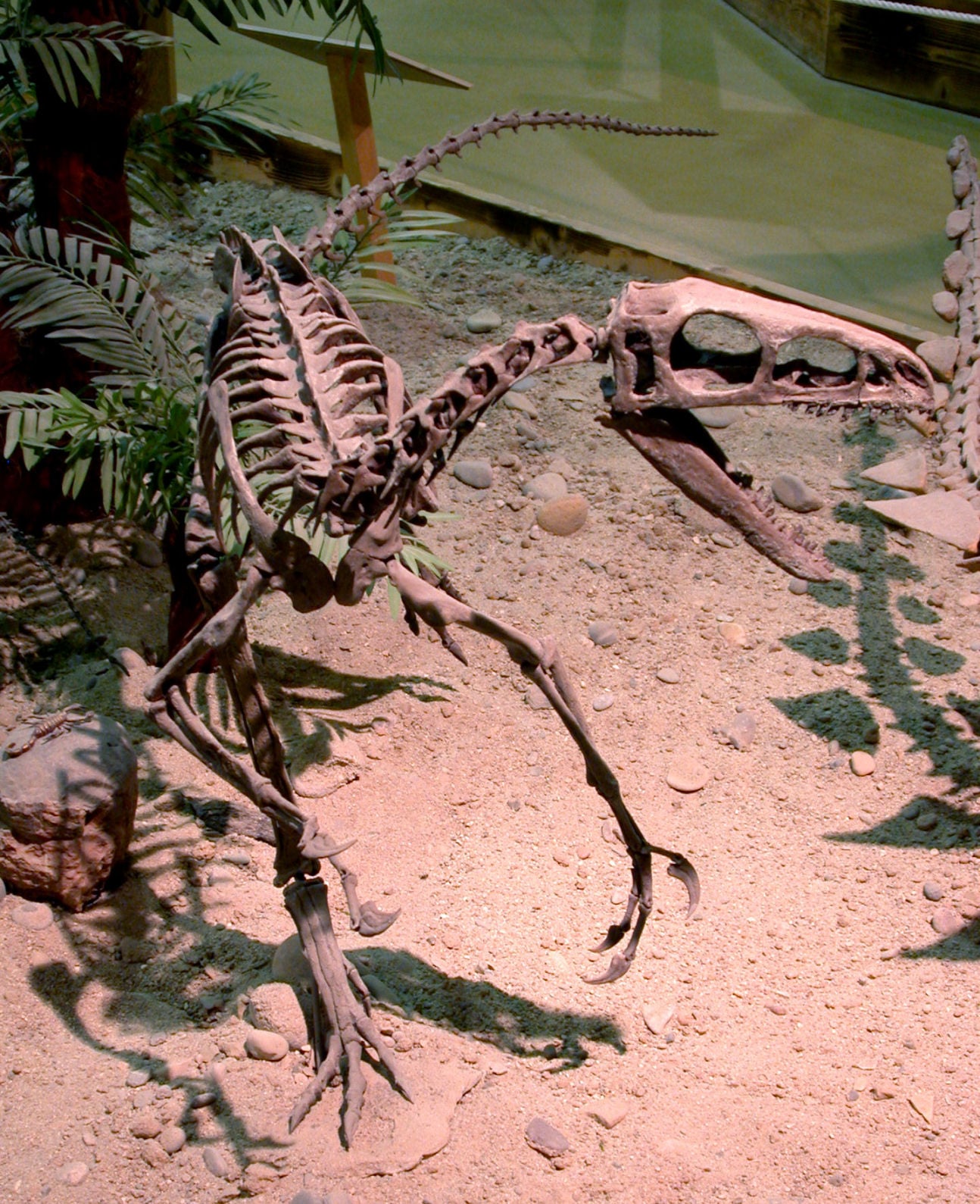
The tail belonged to a coelurosaur, an ancestor of the modern birds we still see today. These relatively little guys were omnivores. Coelurosaurs were a whole family of dinosaurs, so there were many different kinds of them, all with their own variations.
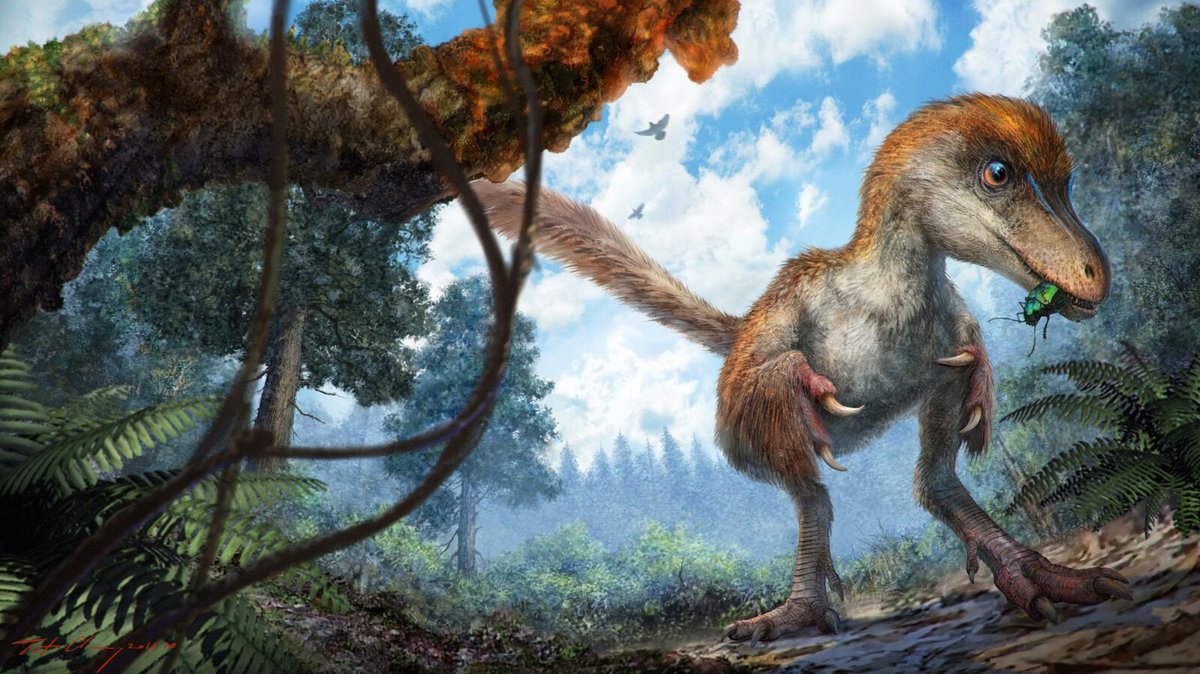
While they might have been small, they survived, in a way.
Over millions of years, they ended up becoming the parrots, penguins, and chickens we know and love today.
If they looked anything like this artist's interpretation, they were pretty cute.
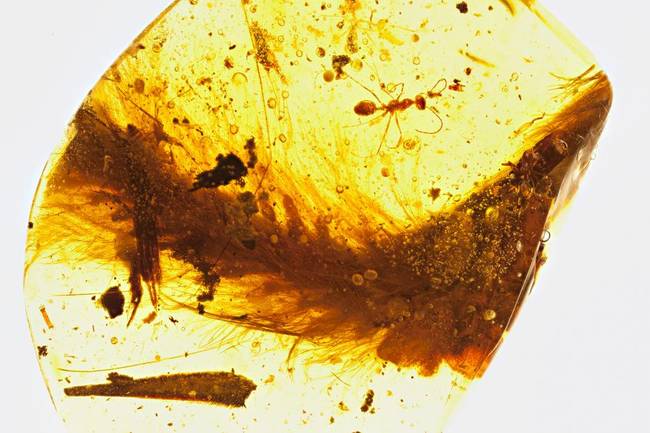
The piece of amber, nicknamed "Eva," was originally going to be a piece of jewelry, and had been sanded down in places.
Normally, that would alarm paleontologists, but in this case, it was actually a good thing. They were able to get a cross section of the tail for study.
The tailpiece is made of feathers and soft tissue, as well as eight tiny vertebrae. The feathers are chestnut brown and white.
It also looks like there's an ant trapped in the amber, but there's no word on what its deal is yet!
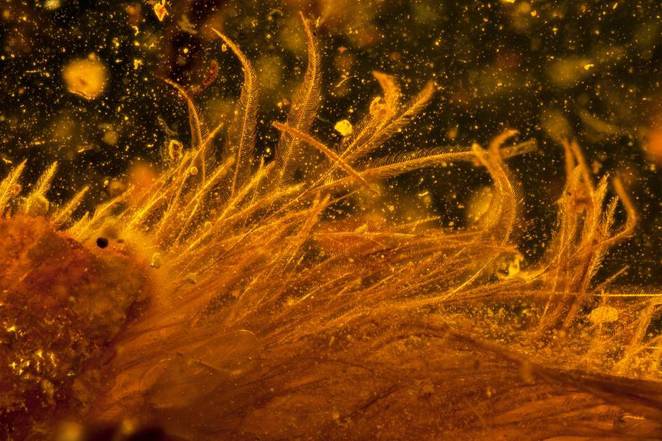
The tail was examined by scientists at the Royal Saskatchewan Museum, where they even found traces of hemoglobin, the molecule that makes blood red, just like we have in our bodies.
They also found that the arrangement of the feathers suggests that the coelurosaur had a fan-shaped tail, something they'd never be able to see based on a skeleton alone.
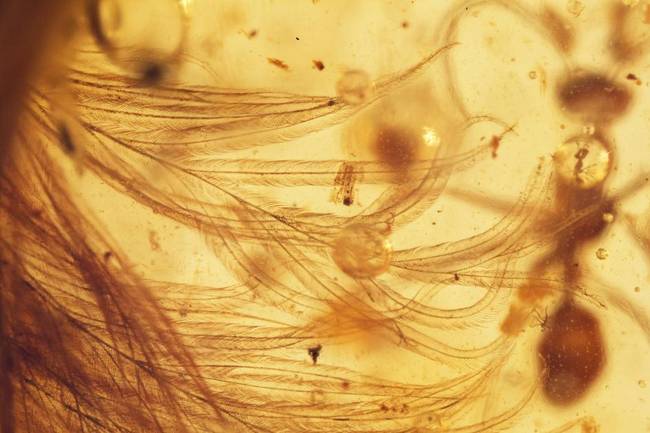
The feathers are very thin and long, so coelurosaurs wouldn't have been able to fly.
Scientists think that they were likely used in temperature regulation, more like fur, and maybe even in mating or social displays, like birds of today.
Their structure also means that they would have appeared fuzzy and downy, like a baby chicken.
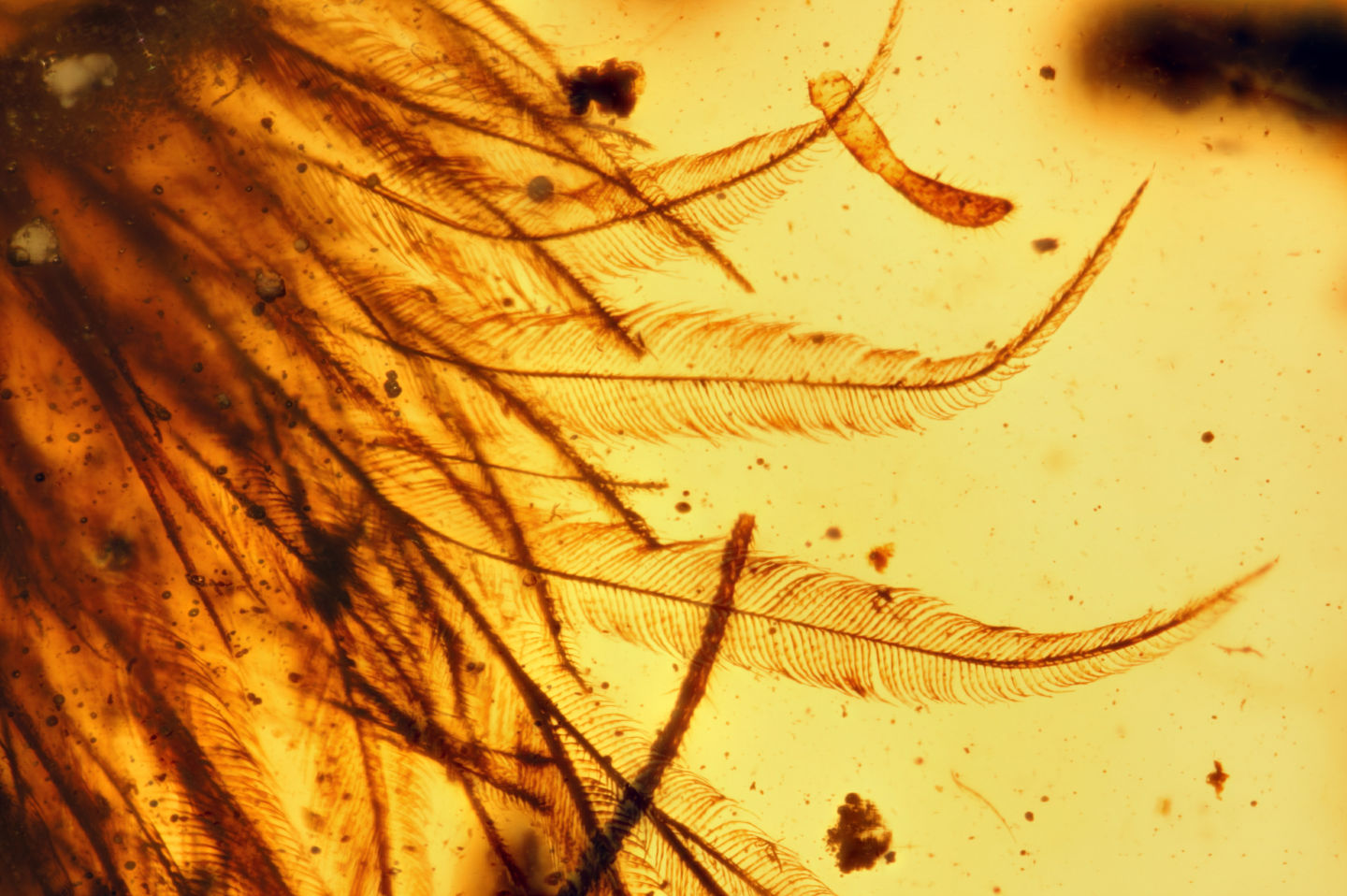
Thanks to this find, Xing and paleontologists around the world are hoping for greater access into amber mines, where they hope to find more ancient creatures frozen in time. It could potentially lead to all kinds of breakthroughs.
"Maybe we can find the complete dinosaur," Xing says hopefully.
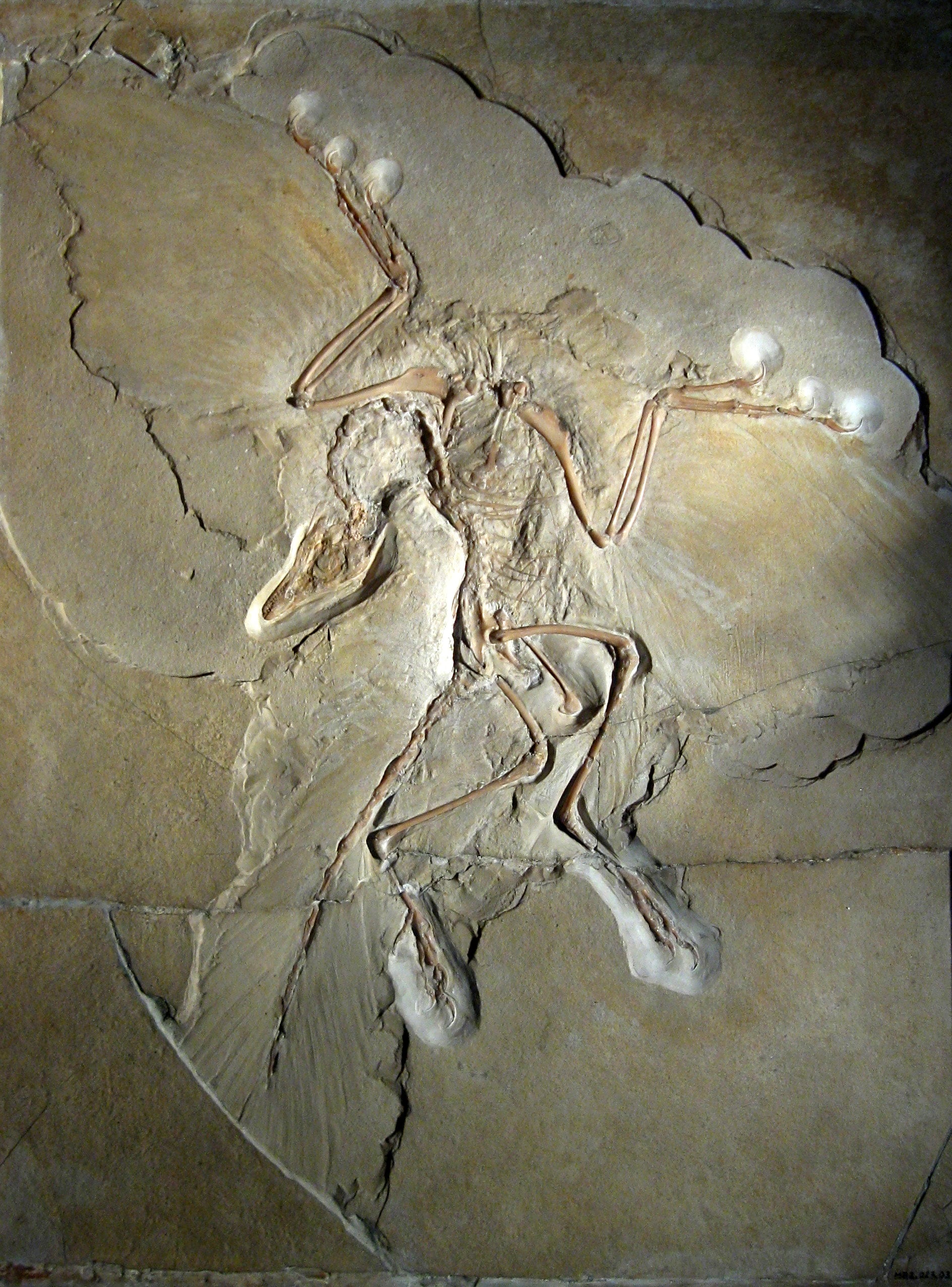
Scientists have known about feathered dinosaurs for a long time, but this is the first time they've actually gotten to see the feathers themselves and not just impressions, like on this Archaeopteryx fossil.
Nature is pretty amazing, and the next discovery might be just around any corner. SHARE this incredible find with anyone who loves dinosaurs — and birds — and who would love the idea of a fuzzy dino!