
As more and more people turn to GLP-1 medications to either lose weight or get their health back on track, I wonder how many of them have forgotten that foods exist that can do so much good — or bad — for the body. To be fair, it is understandable to write off specific diets. So many of us have had experiences with fad diets and know firsthand that they just don’t work long term. But a bigger problem might be that we as Americans eat so many ultra-processed foods and not nearly enough whole or minimally processed foods.
Nearly 75% of the US food supply is considered to be “ultra-processed.” Ultra-processed foods are defined as foods that have one or more ingredients that wouldn’t be found in a kitchen, such as emulsifiers and high-fructose corn syrup. A sad reality is that more than half of the food average US adults consume comes from such foods. In fact, they make up a good portion of the grocery store.
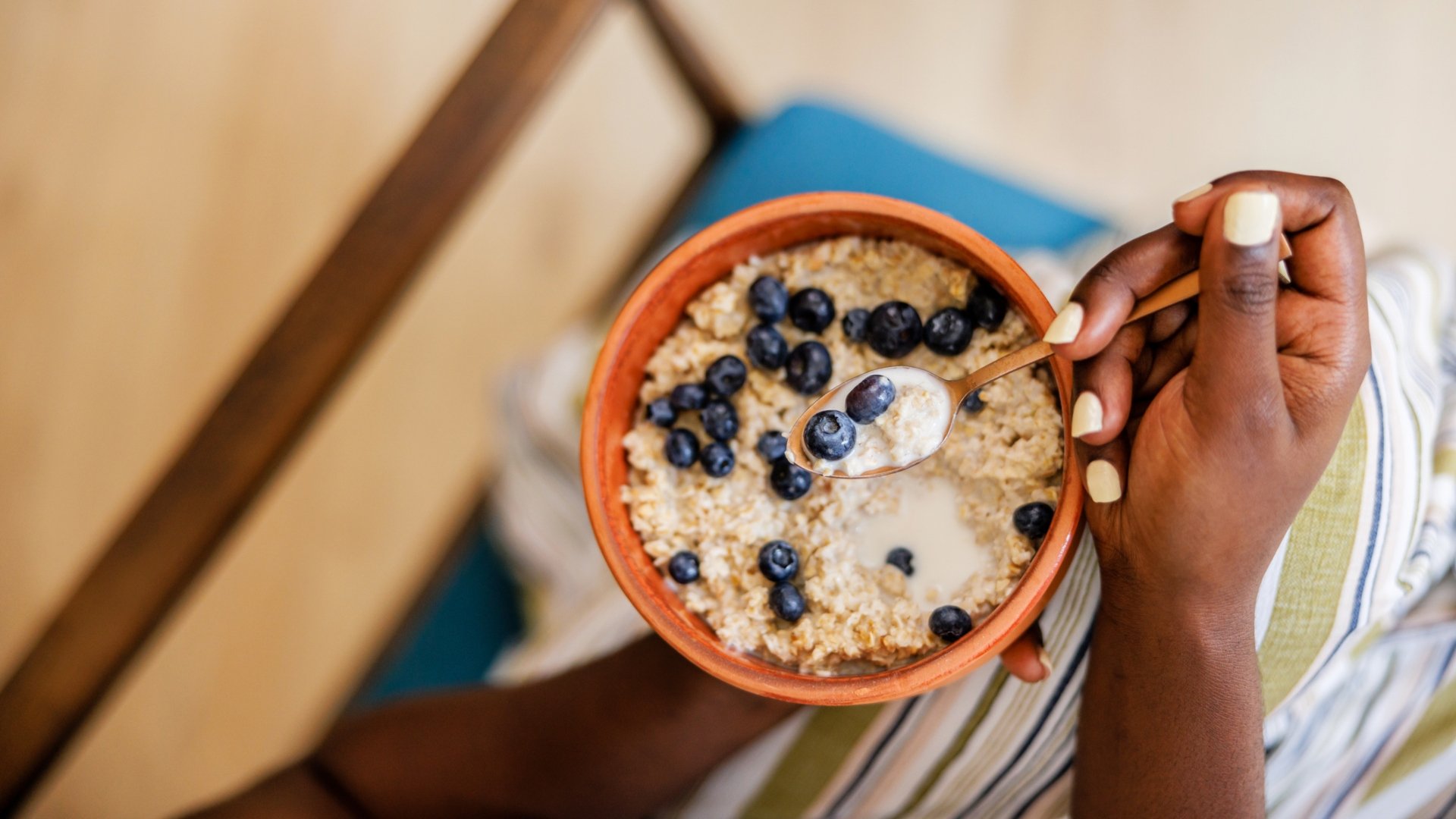
I know in my very busy life that I rely on a lot of them to simply get by. Although it might be tempting to buy ultra-processed foods for ease and convenience, working in simple swaps such as ditching instant oatmeal for plain, unprocessed oats (steel-cut or rolled) can exponentially help your health.
Don’t believe me? Researchers from the University of Bonn in Germany recently learned that those unprocessed oats can improve health issues in just 48 hours.
LAD Bible reported that the group ran a small trial of 34 adults who had metabolic syndrome, a cluster of conditions that increase risk of diabetes and heart disease, to see if they could improve their health with a restrictive, specific diet change. They had one group eat boiled oats three times a day, while the other had a low-calorie but oat-free diet. The group eating oats was allowed to add things to it, like unprocessed fruits, but overall both ate a calorie-deficit diet. And the results? Honestly, pretty amazing.
Even though both groups lost weight, the group eating mostly oats had a significant drop in “bad” LDL cholesterol — about 10% lower after the two days.
“That is a substantial reduction, although not entirely comparable to the effect of modern medications,” author Marie-Christine Simon, a junior professor at the Institute of Nutritional and Food Science at the University of Bonn, told the outlet. “They also lost two kilos [about 4.4 lbs] in weight on average, and their blood pressure fell slightly.”
Eating that diet every day is not sustainable, but doing it for a brief interval can improve health significantly, and even adding it routinely to a weekly diet can have effective health impacts. Oats are high in soluble fiber, so researchers believe that eating lots of oatmeal changed the participants’ gut bacteria in ways that influenced their cholesterol metabolism. By eating this way, participants increased consuming compounds such as ferulic acid that may support heart health.
“It has already been shown in animal studies that one of them, ferulic acid, has a positive effect on the cholesterol metabolism. This also appears to be the case for some of the other bacterial metabolic products,” Simon explained to LAD Bible.
Add an apple to your oats each day, and you could be unstoppable.