
Southern Peru is home to the extremely dry Nazca Desert. This vast expanse of rocky sand and dry mountains is one of the most arid places on Earth, but even so, people have managed to call the place home for thousands of years.
And if you happen to end up there, you might notice some areas of the ground where the reddish-brown pebbles have been swept away, revealing light, grayish earth underneath. And you might notice that these areas look a little too neat and clean to be accidental.
But if you were to fly over the desert, you'd see what these really are!
These famous landmarks are known as the Nazca Lines, huge drawings right on the ground that take the shape of animals, people, plants, and geometric forms when viewed from the air.
And since they were made between 2,500 and 1,500 years ago, it's safe to say no one was designing them via drone camera.
The Nazca Lines have been one of the planet's most enduring mysteries in terms of how and why they were made. They're often compared to the mysterious patterns that appear in crop fields all over the world.
And naturally, that means all kinds of theories exist. Check out some of these amazing ancient designs below, and let us know what you think they really are!
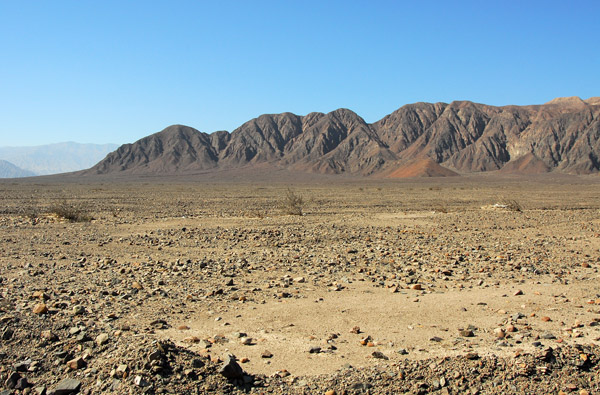
Visit the Nazca Desert in southern Peru and you'll be greeted with a view like this — just sand, clay, and rocks for as far as the eye. But look closely, and you might see something else.
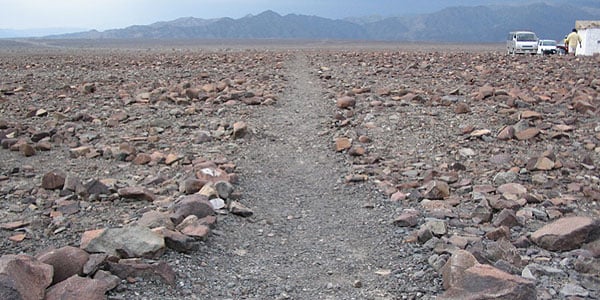
All over the desert, which is about 400 miles south of Lima, areas of the ground have been cleared of the reddish pebbles and sand that make up the top layer of soil, exposing the lighter gray sand beneath. And these areas stretch out seemingly forever.
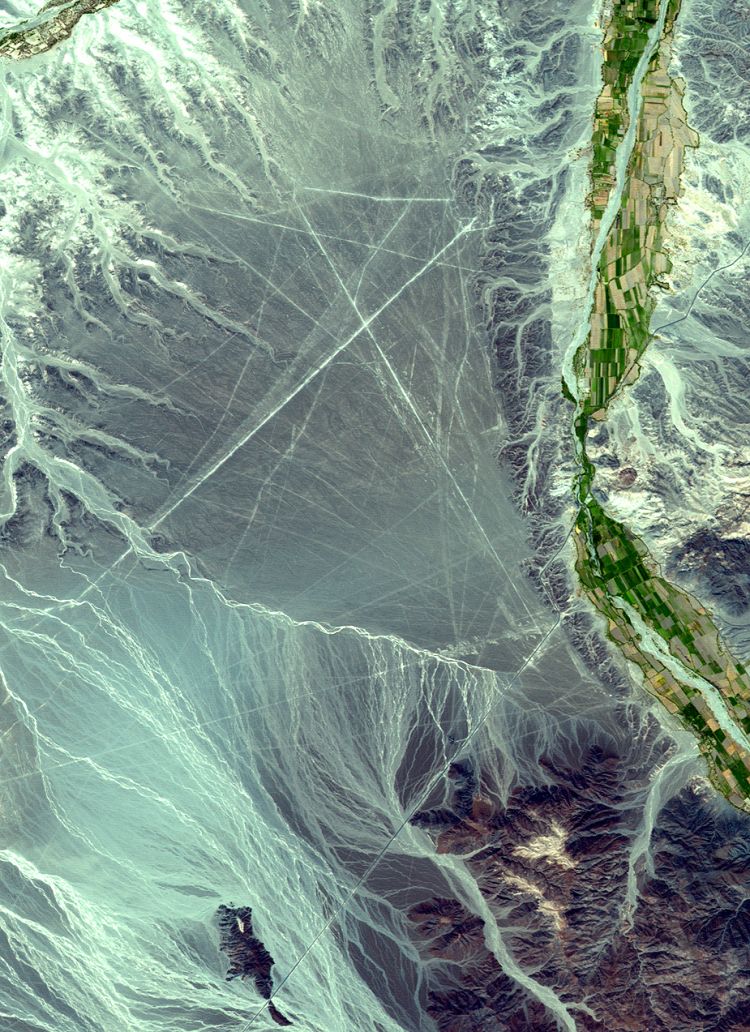
But if you fly over the desert in a plane, you'll see something very different. The lines do stretch out for miles, but with a precision that's startling, especially when you consider they were put in place over a thousand years ago.
The straight, intersecting lines in this satellite image are just some of the Nazca Lines, and these are some of the tamer ones!
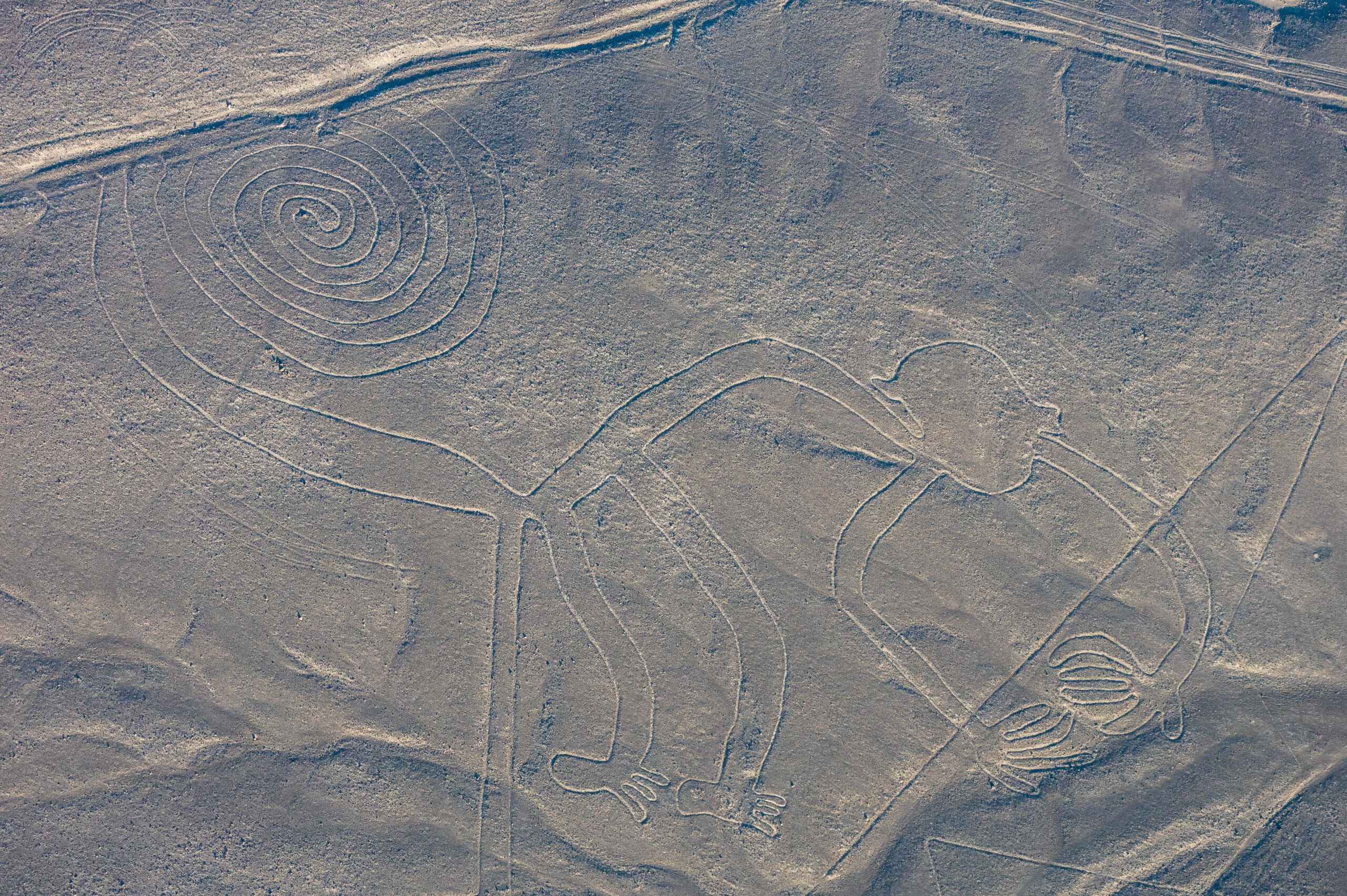
Besides geometric forms, the Nazca Lines also take the shape of animals, plants, and even humans. In all, about 70 out of the hundreds of designs are complex images like this monkey image.
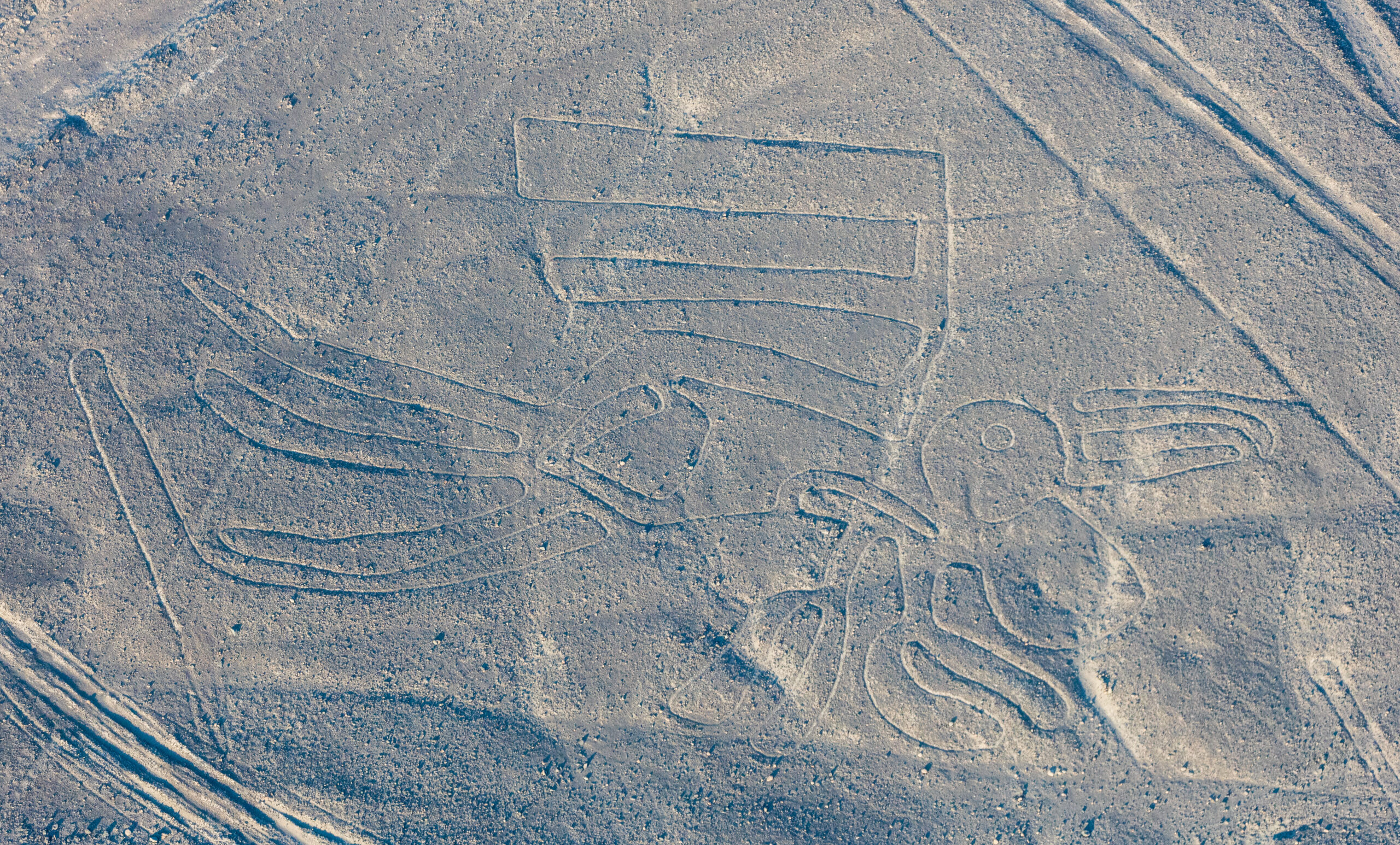
And thanks to the Nazca Desert's still and near-waterless climate, the lines have lain largely undisturbed for all this time, which is almost as incredible as their giant size and precise shapes!
In fact, the lines are actually fixed into the soil thanks to the high amount of lime in it, which hardens and forms a protective layer.
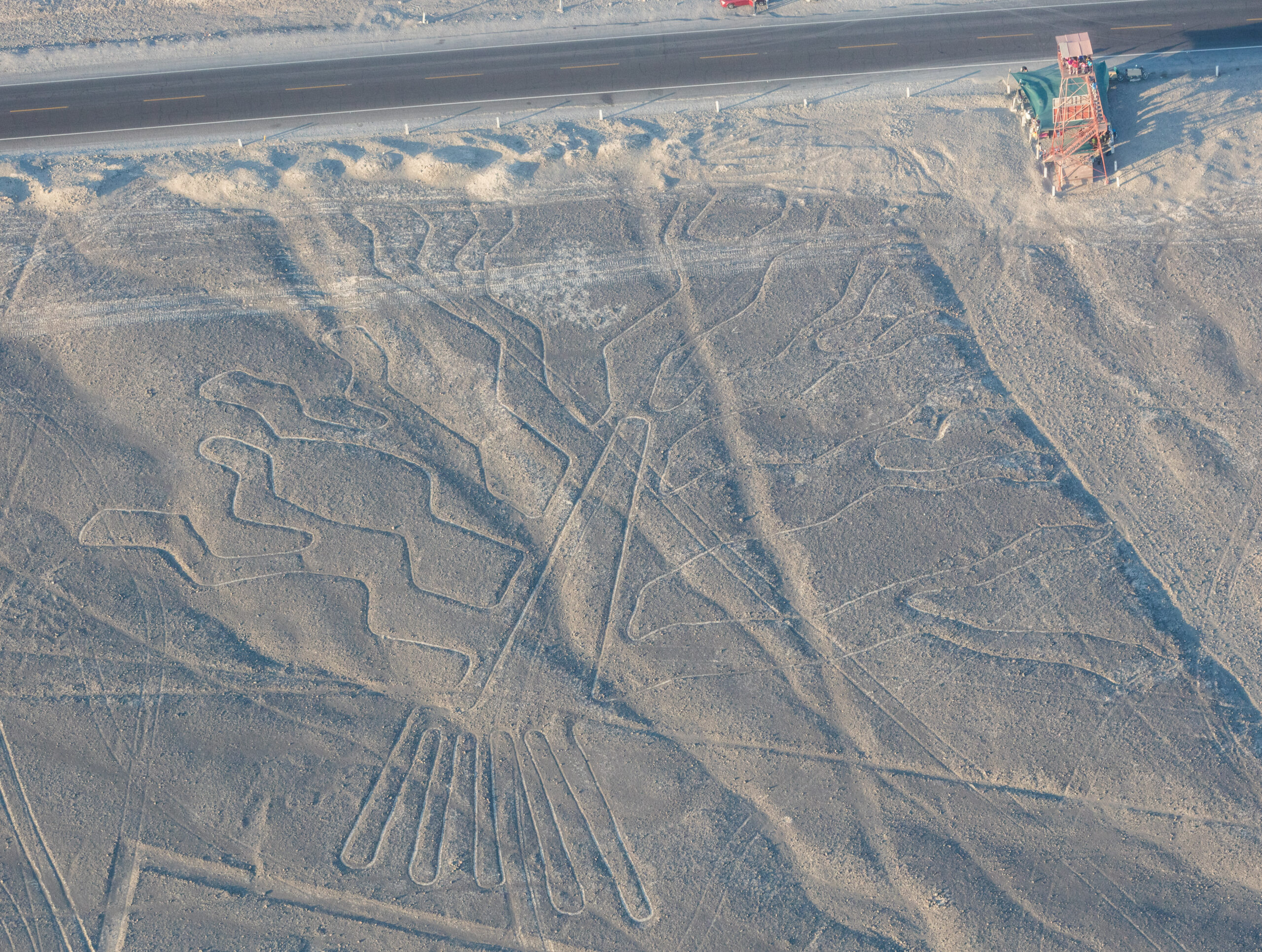
So what are they? Who made them? And how were they made if the plane wouldn't be invented for another thousand years?
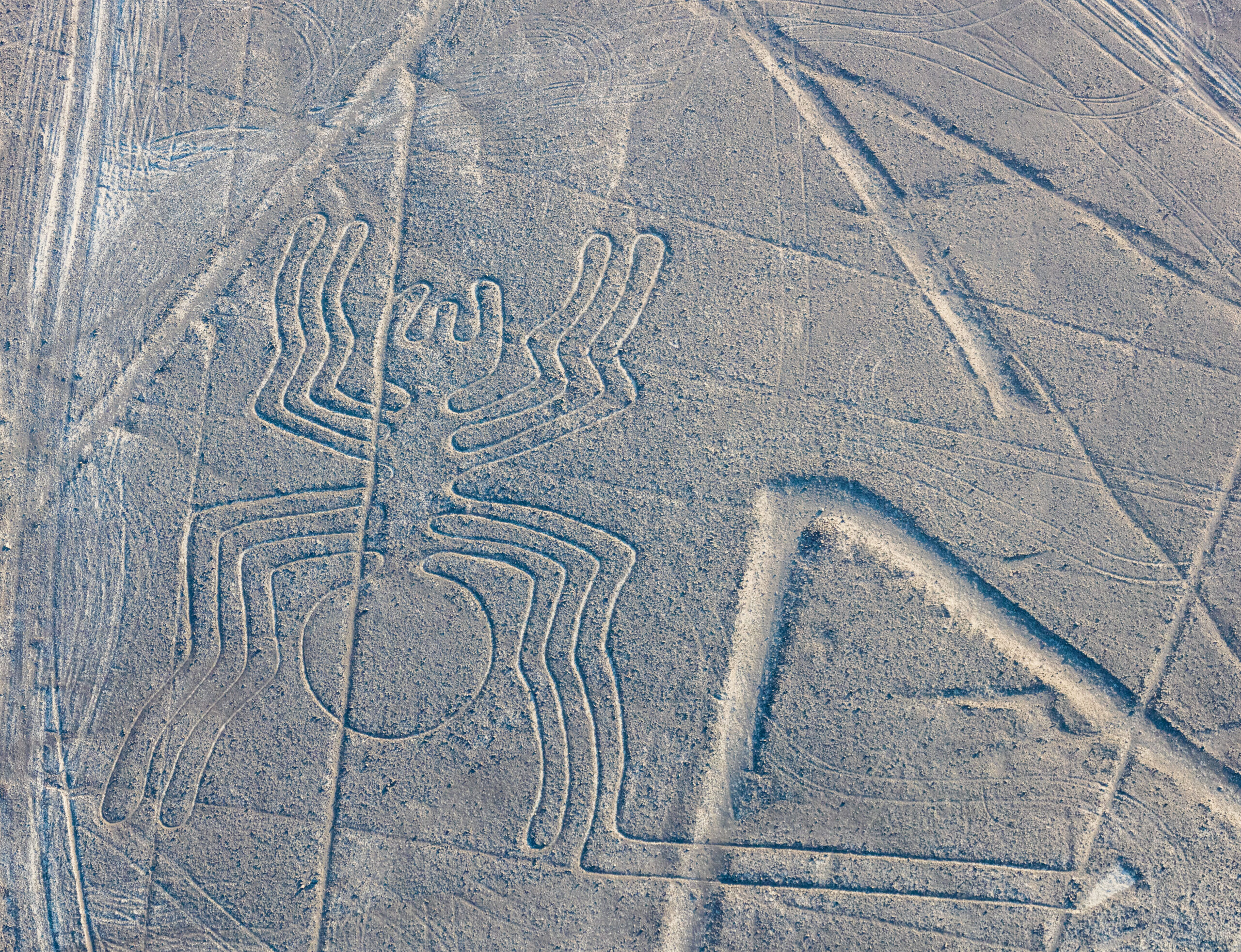
Historians believe that a culture, also called the Nazca, created the designs between 500 BCE and 500 CE.
The prevailing theory is that they were a map of sorts, not of the Earth but of the stars. The figures possibly represented constellations, and the lines may have indicated the positions of the sun and other celestial bodies at certain times of the year.
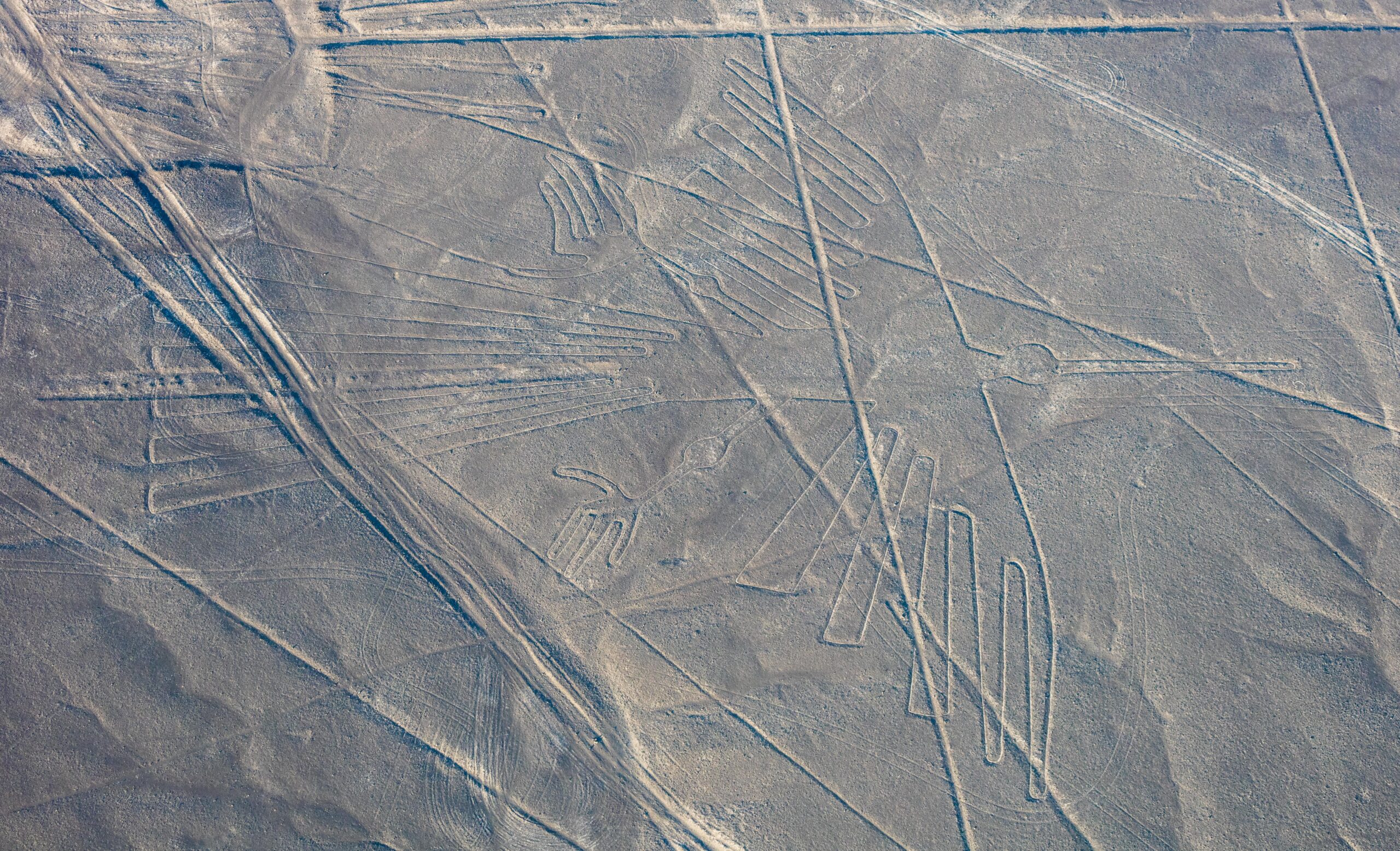
Other theories say that they may represent gods or other mythological figures. Still, others link them to irrigation or to rituals to invoke rain and plenty.
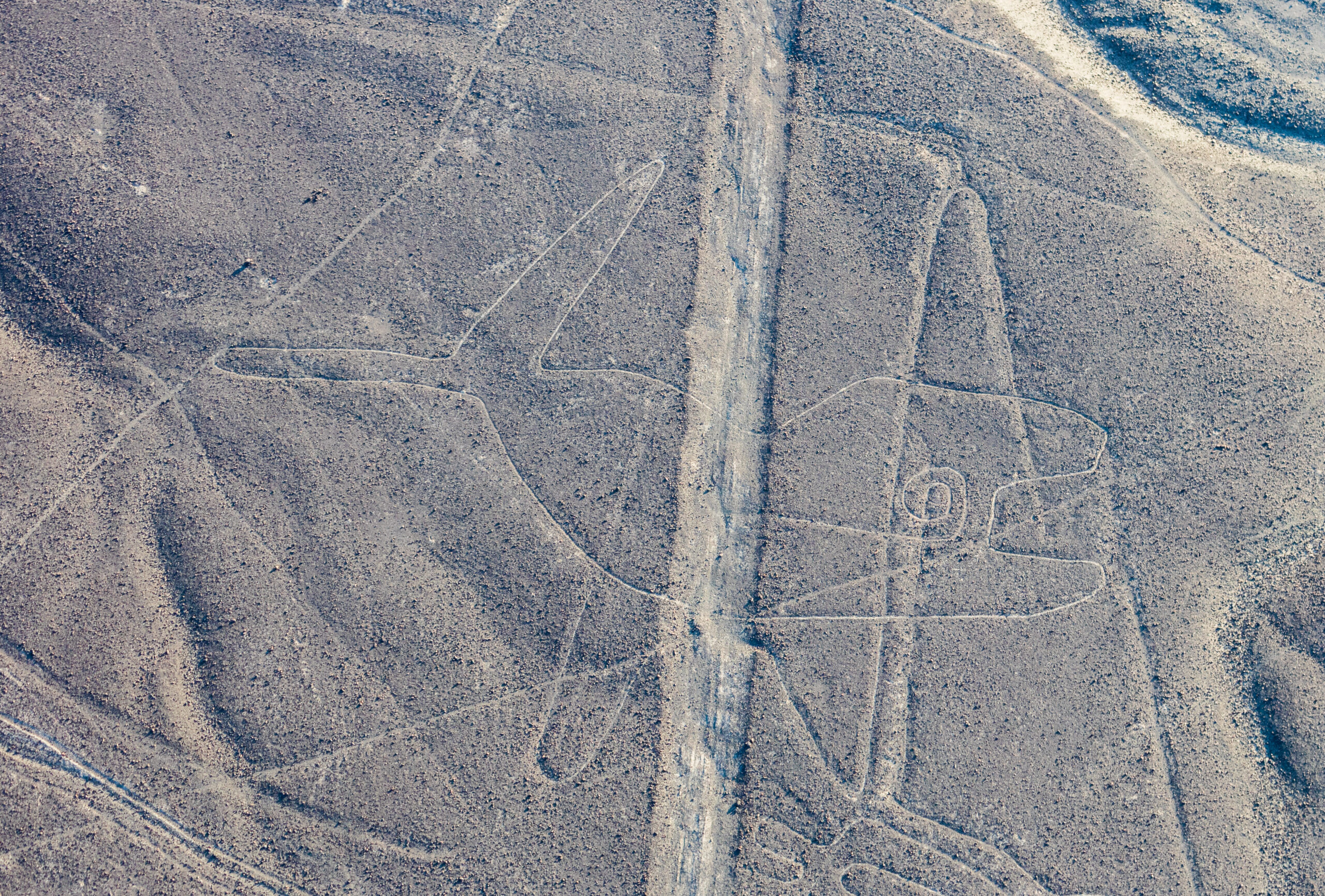
And historians and archaeologists would like to point one thing out, though. There are plenty of high hills nearby from which the full designs can be seen. So you don't actually need a plane to see them!
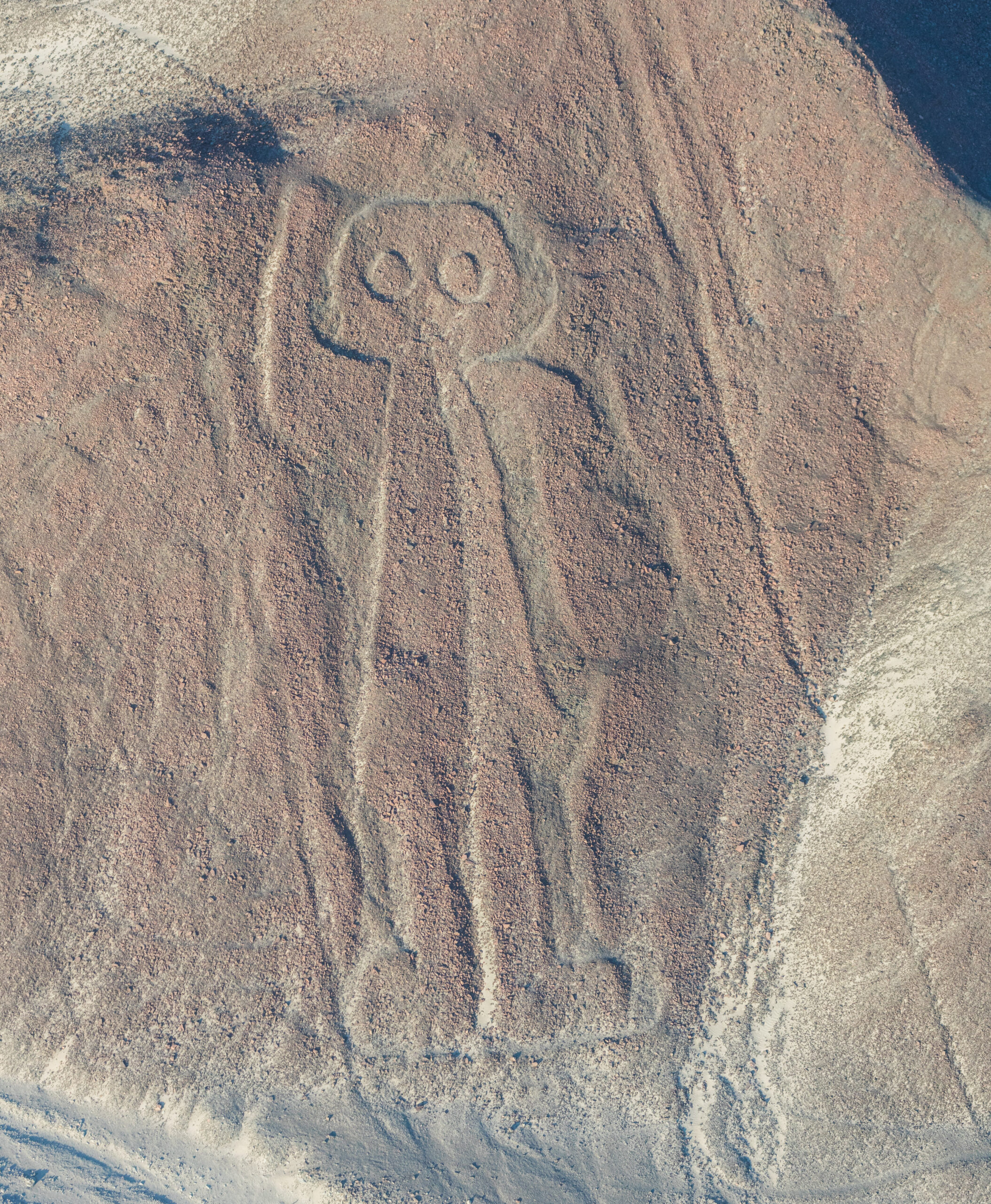
Of course, other theories are more fantastical and involve aliens and the supernatural. Mysterious, quasi-human figures like this one, known as the "Owl Man," fuel these theories.
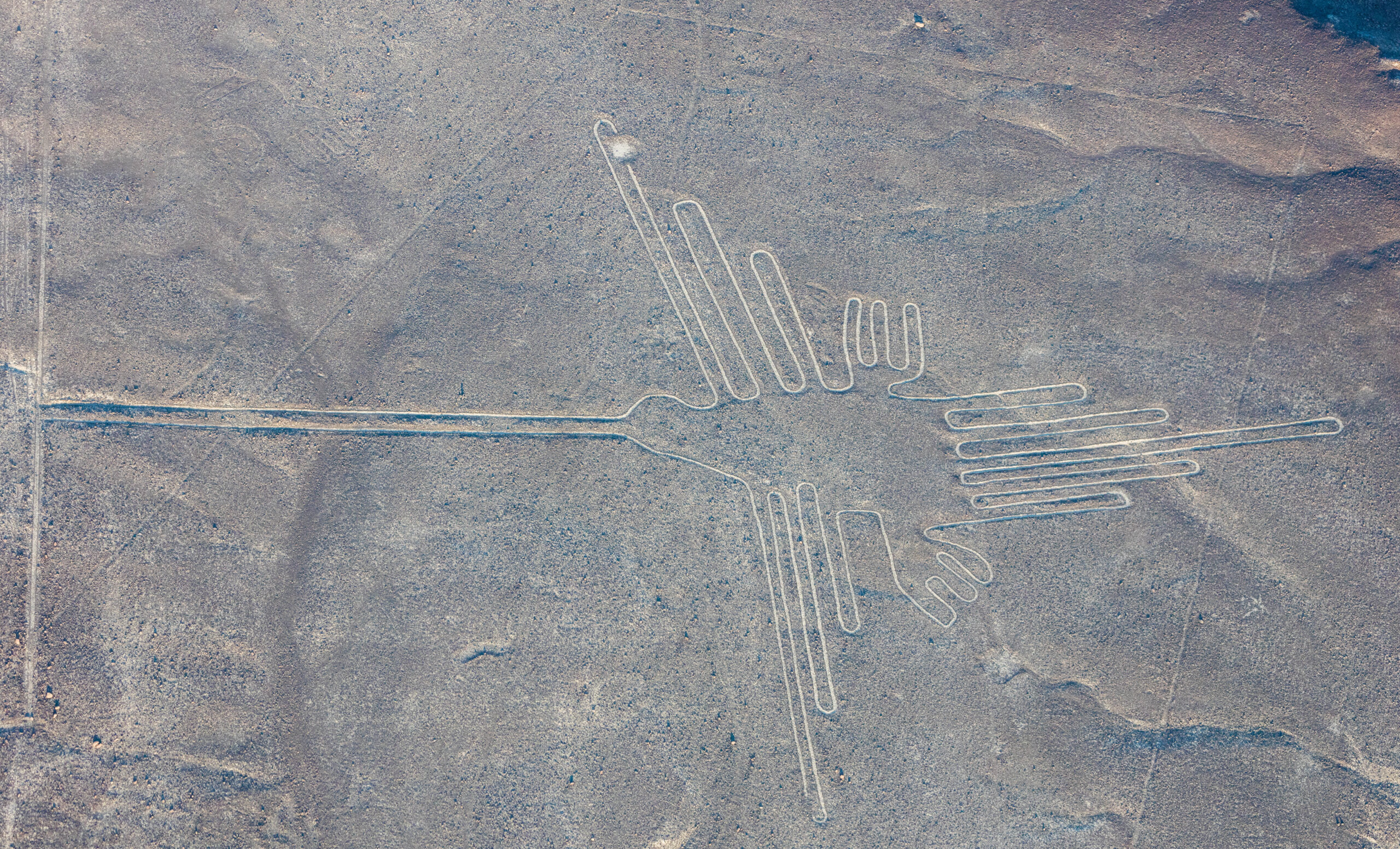
But whatever they might have been, the Nazca Lines are a national treasure of Peru today, and people are working to preserve them in the face of both environmental concerns and careless tourists.
You can discover much more about these strange, mysterious and completely fascinating relics of the past on Wikipedia, where you can also learn about the Nazca people.
And if you know someone who loves ancient cultures and mystery, SHARE these amazing forms of art with them!