
What to Know
As if President Donald Trump’s White House ballroom was not controversial enough already, the Trump administration now has a lawsuit to deal with. Apparently, in addition to the myriad of other problems people have with Trump’s ballroom initiative, the project appears to have a transparency problem. On January 7, 2026, the Asbestos Disease Awareness Organization (ADAO) filed a Freedom of Information Act (FOIA) lawsuit over the Trump administration’s “repeated failure” to provide information related to protections against asbestos exposure.
The ADAO claims the Trump administration ignored multiple requests.
According to a press release, the National Park Service, the Department of the Interior, the U.S. Department of Labor, the Environmental Protection Agency, and the Executive Office of the President received multiple FOIA requests from advocates inquiring about asbestos — and did not respond.
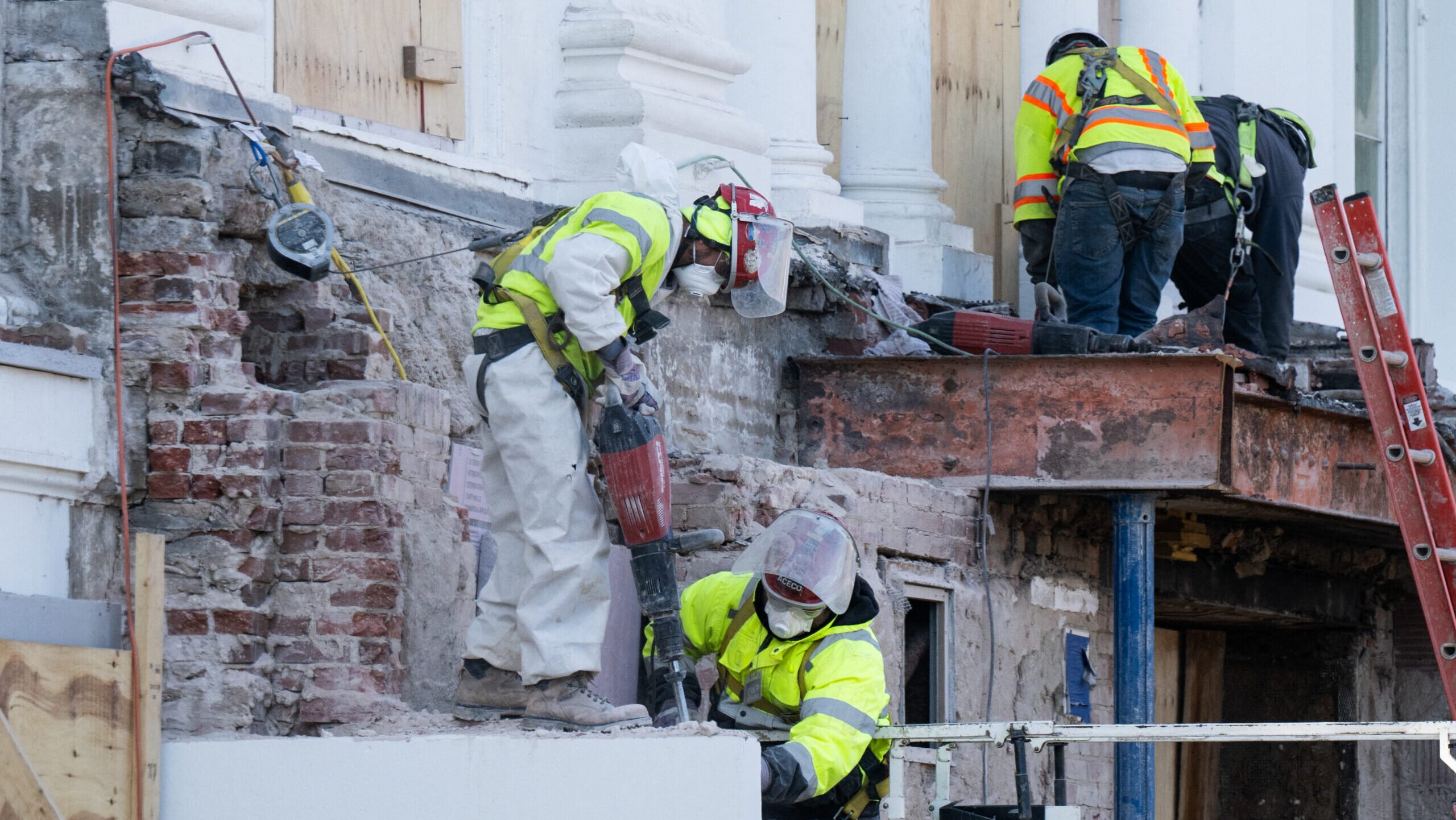
Public health advocates want to know whether demolition crews were exposed to asbestos when the White House’s East Wing was demolished as part of Trump’s ballroom initiative in October 2025. More specifically, they’re seeking “records that would demonstrate whether legally required asbestos inspections, abatement procedures, worker protections, air monitoring, and waste disposal safeguards were implemented and documented,” per the press release.
Sounds reasonable enough. And in the eyes of advocates, saying whether or not they took these necessary steps during the demolition process should not be difficult. Linda Reinstein, the founder of ADAO, told the Washington Post, “We want to know if they did it. Why can’t they just tell us — what’s the big secret here?”
A White House official previously spoke up about the issue.
In a statement (shared anonymously) with the Washington Post, the White House official claimed that the demolition was done in accordance with federal standards. “Any hazardous material abatement was done in September,” they stated. “A very extensive abatement and remediation assessment was followed, complying with all applicable federal standards.”
However, officials have not answered more specific questions or responded to ADAO’s FOIA requests, ADAO has argued. The nonprofit organization suspects that the East Wing contained asbestos because it was originally built in 1902 and then renovated in 1942.
Reinstein also argued that transparency is essential because “asbestos is a known carcinogen,” making the demolition of an old structure a public health concern. And if the White House can’t comply with asbestos laws and regulations, what kind of message does that send?
“Federal agencies and public health authorities have long warned that demolishing older buildings containing legacy asbestos poses serious health risks to workers, bystanders, and nearby residents,” Reinstein said. She added that “the White House should set the national standard for compliance with environmental and worker-safety laws governing asbestos.”